
Hindu vs Muslim are two of the world’s major religions, each with its own beliefs, practices, traditions, and history. Hinduism originated in the Indian subcontinent and encompasses a diverse range of philosophies, scriptures, and forms of worship. Islam began in the 7th century CE in Arabia and is based on the teachings of the Prophet Muhammad and the Quran. While both religions emphasize morality, spiritual growth, and devotion, they differ in their concepts of God, religious practices, sacred texts, and theological teachings.
Historical Background of Hinduism and Islam
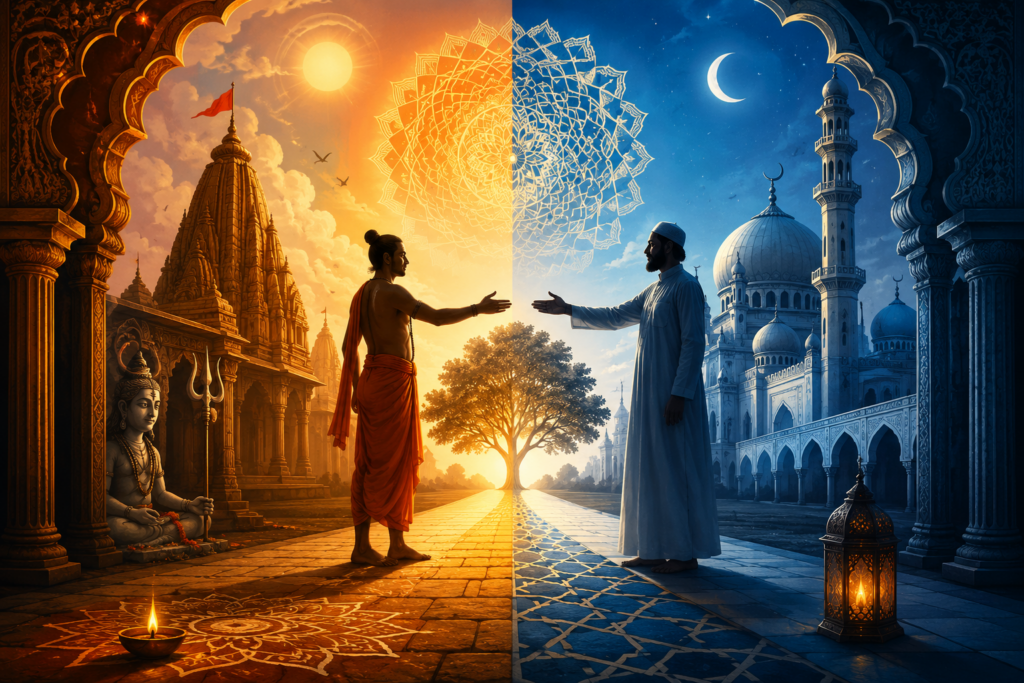
To compare Hinduism and Islam, it helps to see where they came from.
Hinduism is one of the oldest religion systems in the world. Its earliest ideas trace back over 4,000 years in South Asia. There is no single founder instead, beliefs grew over centuries through spiritual teachings like the Vedas and Upanishads.
Islam, by contrast, started about 1,400 years ago in the Arabian Peninsula. It was founded by Prophet Muhammad, who Muslims believe received messages from God (Allah) that were later written down in the Quran.
Timeline of Key Events
| Event | Hinduism | Islam |
| Earliest roots | ~2000 BC+ | ~610 AD |
| Key texts begin | Vedas | Quran |
| Central figure | No single founder | Prophet Muhammad |
| Geographic origin | South Asia | Arabian Peninsula |
Real Example:
In India, the Indus River Valley civilization shows some of the earliest roots of what became Hindu traditions. In contrast, Mecca in Saudi Arabia is where Prophet Muhammad began preaching Islam.
Both traditions have since spread worldwide, including to the United States, shaping community life and culture in diverse ways.
Core Beliefs and Practices
Let’s break down what people believe and how they practice their religion.
Hinduism Belief and Practice
Hinduism includes a wide variety of beliefs, but some central ideas include:
- Many ways to connect with the divine Hindus may worship multiple deities like Brahma, Vishnu, Shiva.
- Karma and reincarnation Hindus believe actions shape future lives.
- Goal of liberation (moksha) escaping the cycle of life and rebirth.
Islam Belief and Practice
Islam focuses on a clear set of beliefs:
- Monotheism belief in one God (Allah).
- Five Pillars of Islam key devotional acts including prayer five times a day and giving to charity.
- Afterlife and judgment Muslims believe in life after death with reward or accountability.
Comparison Table: Beliefs & Practices
| Aspect | Hinduism | Islam |
| Number of Gods | Many | One |
| Scripture | Vedas, Upanishads | Quran |
| Key Teachings | Karma, Rebirth | Five Pillars |
| Afterlife | Reincarnation | Resurrection & Judgment |
This table helps you see the core differences quickly great for memory and search engines alike.
Cultural Expressions in Daily Life
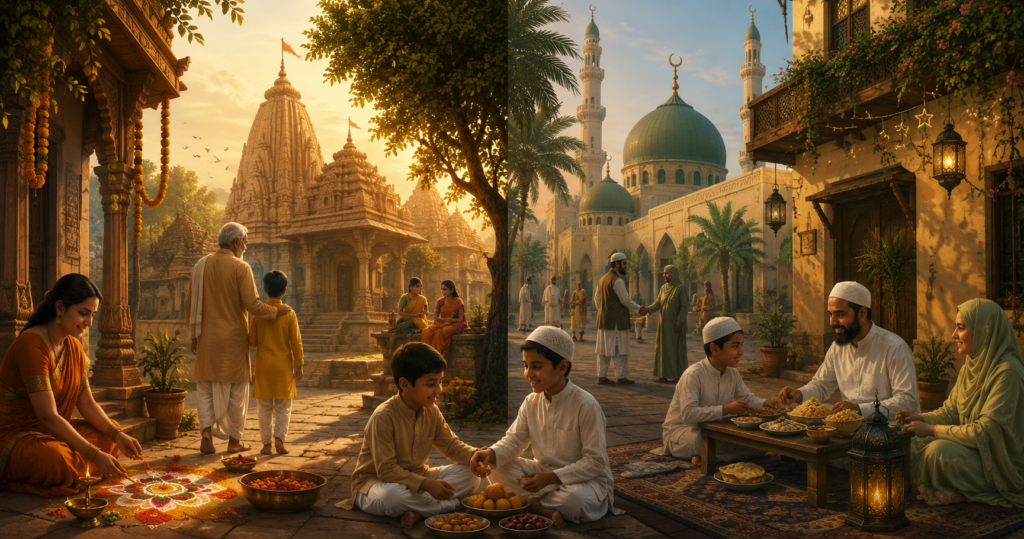
Beliefs show up in everyday life in rituals, festivals, and habits.
Rituals and Daily Life
- Hindus may visit temples, practice meditation, and honor deities through offerings.
- Muslims pray five times a day facing Mecca and attend mosque gatherings weekly.
Hindu vs Muslim Weddings and Ceremonies in the USA
Here’s something many guides miss: how these religions express their traditions in America:
- Hindu weddings often feature vibrant ceremonies with chants, sacred fire, and detailed rituals that symbolize unity.
- Muslim weddings focus on the nikah (marriage contract), often followed by community prayers and celebrations.
These ceremonies show how tradition adapts but stays rooted even far from the religion’s origin.
Festivals and Celebrations
People love celebrating festivals, and these are big moments:
- Hindu festivals:
Diwali – Festival of Lights
Holi – Festival of Colors
- Muslim festivals:
Eid al‑Fitr – marks end of Ramadan
Eid al‑Adha – honors sacrifice and faith
Quick Festive List
- Diwali: lights, sweets, firecrackers
- Holi: color throws, music
- Eid al‑Fitr: communal prayer, feasting
- Eid al‑Adha: community meals, charity
These shared moments create community ties and give you a peek into how faith touches daily life.
Demographics and Community Presence in the USA
People often want to know how many followers of each faith live in the United States.
According to surveys from Pew Research Center, there are hundreds of thousands of Hindus and millions of Muslims in the United States and both communities are growing as immigrants bring their traditions, families form interfaith circles, and young Americans explore spiritual identity.
Where People Live
- Hindu populations are concentrated in states like New Jersey, California, and Texas.
- Muslim communities are strong in Illinois, Michigan, and New York.
Why This Matters:
Religion shapes community centers, festivals in local parks, and even school diversity programs.
Social and Interfaith Dynamics
Beliefs don’t exist in isolation. How do communities interact?
In many American cities, Hindus and Muslims work and live side by side. Interfaith groups bring people together to discuss shared values like compassion, charity, and peace.
For example:
- Community potlucks where people share food during major festivals.
- Interfaith panels where leaders speak on tolerance and mutual respect.
- Youth groups that explore ethics and identity together.
Hindu‑Muslim Interfaith Collaboration Examples
- Local community centers hosting open mosque and temple days
- Charity drives organized together during national holidays
These examples help you see real cooperation beyond abstract comparisons.
Expert Insights First‑Hand Views
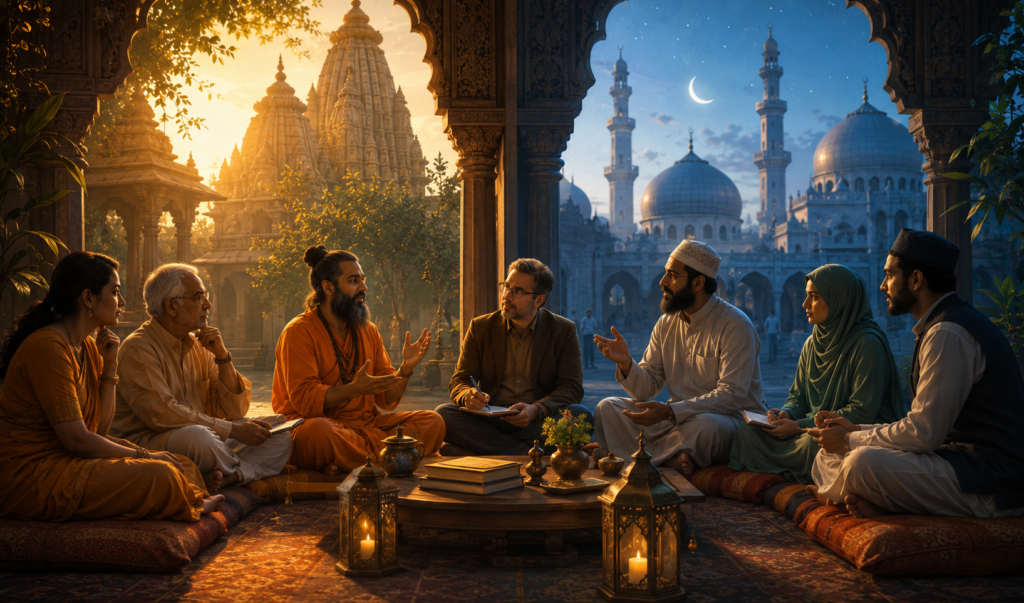
When you talk to scholars and community leaders, you start to see deeper nuance.
Dr. Anita Patel, a religious studies professor in New Jersey, says:
“People often look at differences because they are easy to list. But in everyday life, compassion and community service often matter more than theological debates.”
Imam Rashid Al‑Hassan, a Muslim leader in Texas, adds:
“My mosque often partners with the nearest Hindu temple for food drives. Faith here becomes a bridge, not a barrier.”
These real experiences show life beyond textbooks and that’s where experience and trust live.
PAA & Voice Search Questions
Here are key questions people type into search engines and voice assistants every day.
What is the difference between Hinduism and Islam?
Hinduism includes many gods and belief paths, whereas Islam centers on one God and a clear set of practices called the Five Pillars.
Are Hindus and Muslims monotheistic?
Muslims are strictly monotheistic. Hinduism includes a range of beliefs that can emphasize many gods or one universal spirit.
How many Hindus and Muslims live in the USA?
There are hundreds of thousands of Hindus and millions of Muslims in the United States, with both populations growing due to immigration and community building.
Each answer is written to be short, clear, and snippet‑eligible for AI Overviews.
Conclusion
Understanding the differences between Hinduism and Islam can promote greater awareness and respect for religious diversity. Although the two faiths have distinct beliefs and traditions, both have shaped cultures, communities, and civilizations around the world. Learning about each religion in an objective and respectful way helps foster mutual understanding and constructive dialogue.
FAQs
Which religion is older, Hinduism or Islam?
Hinduism is older, with traditions stretching back thousands of years, while Islam began about 1,400 years ago with Prophet Muhammad.
Do Hindus and Muslims share any similarities?
Yes. Both encourage compassion, family values, and ethical living, even though their beliefs and practices differ.
What are the core scriptures of Hinduism and Islam?
Hinduism has texts like the Vedas and Upanishads. Islam’s central scripture is the Quran.
How do Hindu and Muslim dietary rules differ?
Many Hindus choose vegetarian diets for spiritual reasons, while Muslims follow halal guidelines, which include how animals are treated and slaughtered.
How do these religions influence cultural identity in the USA?
They shape community rituals, food traditions, festivals, and ethical outlooks contributing to the cultural fabric of American cities and towns.