
The Islamic dress code for males emphasizes modesty, cleanliness, and dignity. In Islam, men are encouraged to wear clothing that covers the body appropriately, avoids extravagance, and reflects humility. The primary requirement is covering the area from the navel to the knees, while maintaining a modest appearance in public.
The Core Rules of Islamic Dress for Men
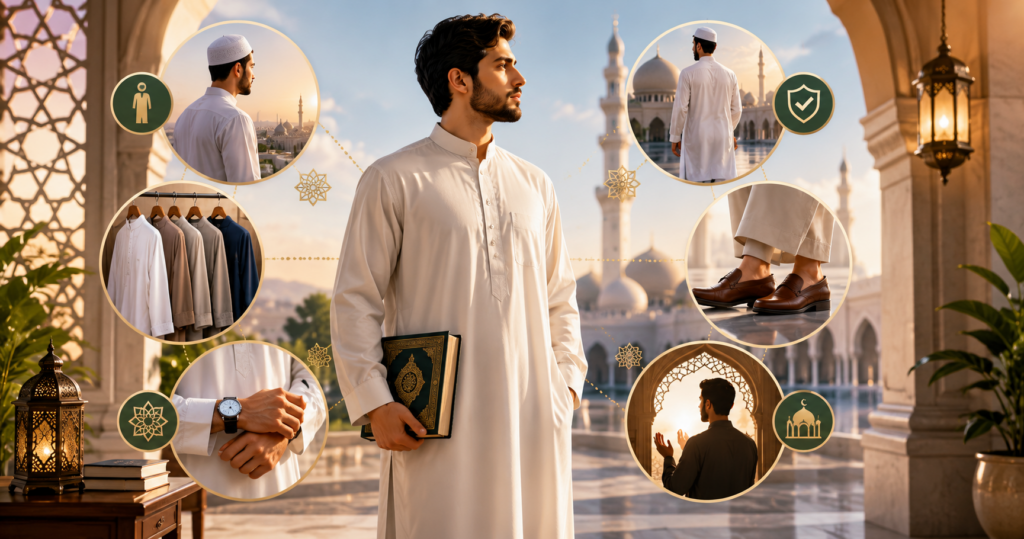
Let’s break the muslim men’s clothing rules into plain pieces. None of this is complicated once you see the logic.
What men must cover (awrah)
For men, the awrah is the body between the navel and the knee. That’s the baseline you must keep covered around others. So shorts that stop above the knee in public? Better to rethink those.
Loose, opaque, and not skin-tight
Clothing should drape, not cling. Tight clothes that trace every muscle defeat the purpose of modesty. The same goes for thin fabric you can see through if skin shows underneath, it doesn’t count as covered.
Clothing that is forbidden (silk, gold, see-through)
A few items fall under forbidden clothing for men. Pure silk and gold jewelry are off-limits for men specifically. So silk forbidden for men means that fancy silk shirt or gold chain isn’t part of the wardrobe. Mixed or synthetic fabrics that just look silky are generally fine.
Avoiding arrogance and imitation
Faith warns against clothes worn out of pride. There’s also guidance about clothing below the ankles when it’s done to show off status. The lesson isn’t about exact inches it’s about humility.
Here’s a quick rule-to-reason map:
| Rule | Why It Exists | Everyday Example |
| Cover navel to knee | Protects dignity | Avoid short gym shorts |
| Loose fit | Modesty over display | Choose relaxed jeans, not skin-tight ones |
| No pure silk or gold | Reserved guidance for men | Pick cotton or wool, steel watches |
| No transparency | Skin shouldn’t show | Wear an undershirt if needed |
| No arrogance | Humility matters | Dress neatly, not to flaunt wealth |
Bottom line: cover the basics, stay loose, stay humble. Now let’s talk about why these rules exist.
Why Does Islam Require Modest Dress for Men?
Modesty isn’t about hiding it’s about respect. The islamic dress code for male treats clothing as a reflection of character, not just fabric on a body.
Think of it this way:
- Modesty is character, not just clothing. How you carry yourself matters as much as what you wear.
- Dignity and self-respect. Dressing modestly signals that your worth isn’t tied to showing skin or flexing labels.
- Equality across class and wealth. When men dress simply and humbly, a rich man and a working man stand shoulder to shoulder without judgment.
In short, modest dress in islam is less about rules and more about who you choose to be. Which brings us to a common point of confusion.
Islamic Rulings vs. Cultural Clothing Customs
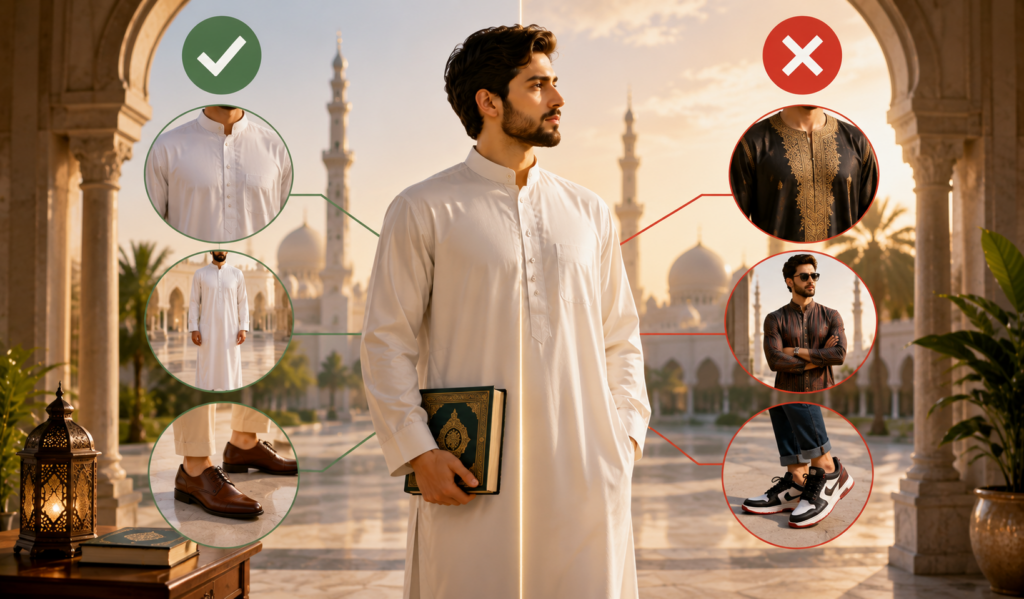
Here’s where many guys get tripped up. Not everything that looks “Islamic” is actually required. A lot of what you see is culture, not commandment.
What is actually a religious requirement
The real requirements are simple: cover your awrah, stay loose and opaque, avoid silk and gold, and dress with humility. That’s the universal part true for a Muslim man in Texas or Turkey.
What is cultural (thobe, kurta, regional styles)
A thobe (a long robe common in the Gulf), a kurta (a long shirt popular in South Asia), and similar garments are cultural choices. They’re beautiful and beloved, but they aren’t mandatory. Wearing them is a preference, not a duty.
Why the mix-up causes confusion in the US
In America, this confusion can make new Muslims feel they must “look Arab” to be devout. They don’t. Let’s compare directly:
| Religious Rule (Required) | Cultural Preference (Optional) |
| Cover navel to knee | Wearing a thobe |
| Loose, opaque clothing | Wearing a kurta or keffiyeh |
| No silk or gold for men | Specific regional colors |
| Humility in dress | A particular cap or headwear style |
The takeaway: you can fully honor your faith in clean, modest western clothes for muslim men. No costume required. So what does that look like day to day?
How Should Muslim Men Dress in Everyday American Life?
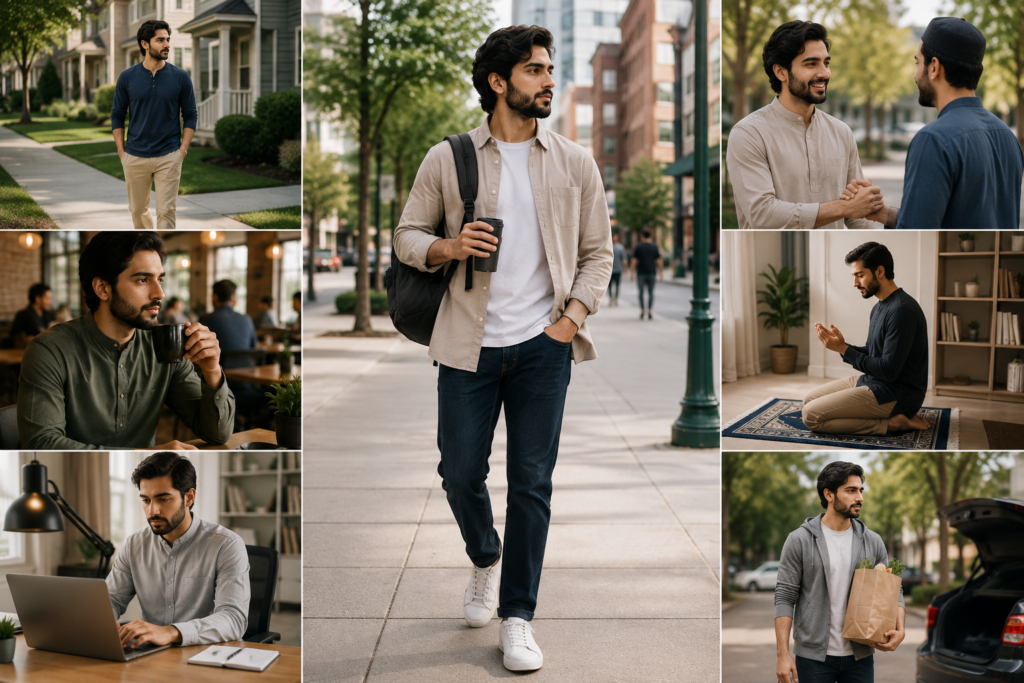
This is the part everyone actually wants. Good news can muslim men wear western clothes? Absolutely. Jeans, button-ups, sweaters, sneakers: all fine, as long as they meet the basics. Here’s how it plays out in real settings.
At work and in offices
Slacks and a loose dress shirt check every box. Avoid skinny-fit trousers that cling. A blazer adds polish while keeping things modest and professional.
At the gym and during sports
This is where men slip up most. Choose knee-length or longer shorts, not the short athletic kind. A breathable, non-clingy tee works great. You can train hard and stay covered.
At weddings and formal events
A suit is perfectly modest and sharp. If you love cultural flair, a clean thobe or kurta is a great option too. Just skip pure silk ties and gold accessories go with cotton, wool, or steel instead.
At school and college
Relaxed jeans, a comfortable shirt, and a hoodie cover everything you need. Modesty here is easy and blends right in. Nobody will look twice and that’s the point.
In casual and Western clothing
Weekend errands? Loose joggers and a regular tee are fine. Just double-check two things: nothing see-through, nothing painted-on tight.
Use this quick “Is my outfit modest?” checklist for any setting:
- Covers navel to knee
- Loose, not skin-tight
- Not see-through
- No pure silk or gold
- Feels humble, not flashy
If you can check all five, you’re good. Now let’s clear up the mistakes that trip people up.
Common Mistakes American Muslim Men Make With Modesty Rules
Even sincere guys get a few things twisted. Here are five common slip-ups and the quick fix for each.
- Confusing culture with religion. Fix: Remember a thobe is optional; modesty is the rule.
- Thinking modesty applies only to women. Fix: The dress code applies to men too—it’s a shared value.
- Wearing skin-tight “modest” clothing. Fix: Loose fit matters as much as coverage; if it clings, size up.
- Misreading the below-the-ankle guidance. Fix: The concern is arrogance, not a strict measuring tape dress humbly.
- Copying advice without checking the source. Fix: Verify with knowledgeable, trustworthy scholars before following a random post.
See a pattern? Most mistakes come from bad information. Let’s fix that next.
How to Evaluate Trustworthy Islamic Dress Guidance Online
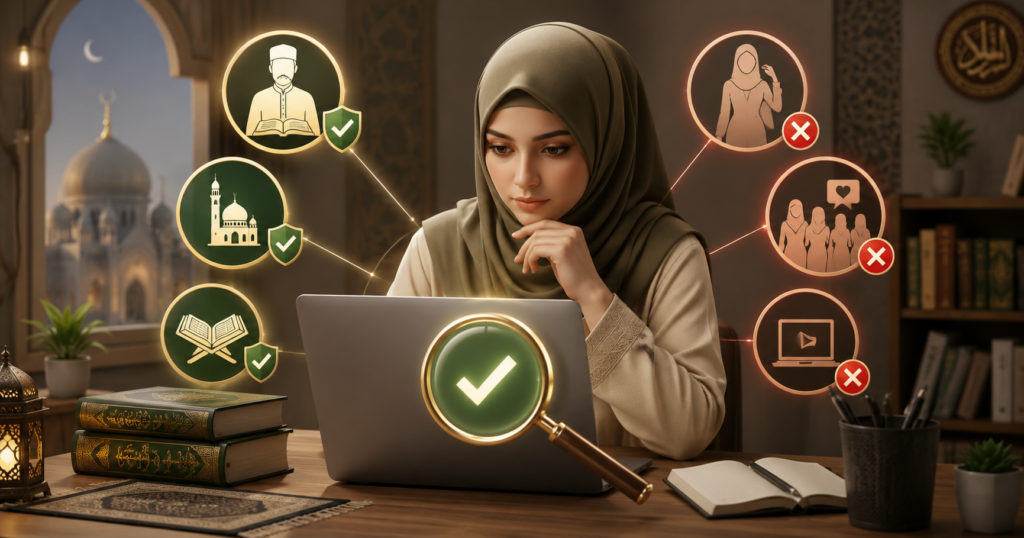
The internet is loud, and not every confident voice knows what it’s talking about. Before you trust muslim men’s clothing rules you read online, run a few checks.
Check the scholar’s credentials
Ask who’s speaking. Did they study under recognized teachers? Credentials and training matter when the topic is your faith.
Look for evidence, not opinion
Solid guidance points to the Quran and the example of the Prophet (the Sunnah). If someone offers only personal feelings with no basis, be cautious.
Beware of cultural bias dressed as religion
Watch for advice that quietly turns one region’s customs into a “rule.” That’s culture wearing a religious mask and it’s exactly what confuses people.
Cross-check across reliable sources
Don’t rely on a single post. Established Islamic scholarship and respected institutions generally agree on the basics, so compare before you commit.
Quick green flags vs. red flags scan:
- Cites Quran and Sunnah
- Names qualified scholars
- Separates culture from ruling
- Pure opinion, zero evidence
- Shames you into one cultural look
- Pressures you to follow instantly
Solid sourcing protects you. Now let’s hear how real men live this out.
Expert Insight: How Muslim Men Apply Modesty in the US
Talk to imams and longtime American Muslims, and a clear theme emerges: the dress code is meant to fit your life, not fight it.
A real-world perspective on balancing faith and Western dress
One convert shared how he panicked early on, thinking he needed a full traditional wardrobe overnight. His mentor laughed kindly and said, “Brother, your modest jeans and loose shirt already obey the rule.” That relief changed everything. He learned that faith met him where he was.
Practical tips from imams and long-time American Muslims
Common advice from experienced community members tends to land on three points:
- Start with what fits the rule, not the fashion. Coverage and looseness first.
- Keep one nice outfit for the mosque and special occasions mosque etiquette leans toward clean, respectful, modest dress.
- Don’t judge other men’s choices. Some love cultural clothing; others stick to Western styles. Both can be faithful.
The lesson? Sincerity and consistency beat appearances every time. Ready to build your own setup? Here’s a simple plan.
Step-by-Step: Building a Modest Wardrobe for Men
You don’t need to spend a fortune or shop overseas. Follow these five steps and you’ll be set.
- Audit current clothes for fit and coverage. Pull out anything tight, see-through, or too short. Most of your closet probably already works.
- Prioritize loose, opaque basics. Stock up on relaxed jeans, comfortable trousers, and non-clingy shirts.
- Add culturally flexible pieces. A thobe or kurta is great for variety and Eid optional, not required.
- Choose event-specific options. Keep one modest suit for weddings and interviews, plus a respectful outfit for the mosque.
- Replace problem items gradually. No rush. Swap out the skinny jeans over time as you upgrade.
Quick shopping checklist to carry with you:
- Loose-fit pants
- Opaque (non-see-through) shirts
- Knee-length or longer shorts
- One modest formal outfit
- Steel or non-gold watch
Build it slowly, and modest dressing becomes second nature. Let’s tackle the questions men ask most.
Conclusion
The Islamic dress code for males is based on the principles of modesty, respect, and simplicity. By following these guidelines, Muslim men can dress in a way that aligns with Islamic teachings while maintaining comfort, cleanliness, and personal dignity in everyday life.
FAQs
What must a Muslim man cover according to Islam?
A Muslim man must cover at least the area between his navel and his knees, known as the awrah. Clothing should also be loose and not see-through. Beyond this minimum, modesty and humility guide the rest.
Can Muslim men wear Western clothes like jeans and t-shirts?
Yes. Western clothes for muslim men are completely fine as long as they’re loose, opaque, and cover the awrah. Relaxed jeans and a regular t-shirt meet the requirements with no problem.
Is silk haram for Muslim men?
Pure silk is restricted for men, so wearing a full silk garment is avoided. This is part of the haram clothing guidance specific to men, not women. Blends and synthetic fabrics that simply feel smooth are generally acceptable.
Why must men’s clothing be above the ankles?
The guidance about clothing below the ankles is mainly about avoiding arrogance and showing off status. It’s about the attitude behind the dress, not a strict measurement. Dressing humbly is the real goal.
Is there a required color or style for Muslim men’s clothing?
No specific color or style is required. You can wear any color and choose Western or cultural clothing freely. The rules focus on modesty, fit, and intention not fashion.
Can Muslim men wear shorts in public?
Shorts are fine as long as they cover the knees and aren’t tight. Very short athletic shorts that expose the thighs don’t meet the dress code. Knee-length or longer options solve this easily.