
The 7 levels of Jahannam in Islam are often mentioned in Islamic literature and scholarly discussions as different (levels) of punishment for those who reject faith and commit major sins without repentance. Jahannam serves as a warning and a reminder of Allah’s justice, encouraging believers to follow righteousness, seek forgiveness, and avoid sinful behavior. Understanding these levels helps Muslims reflect on the consequences of their actions and the importance of living according to Islamic teachings.
What Is Jahannam in Islam?
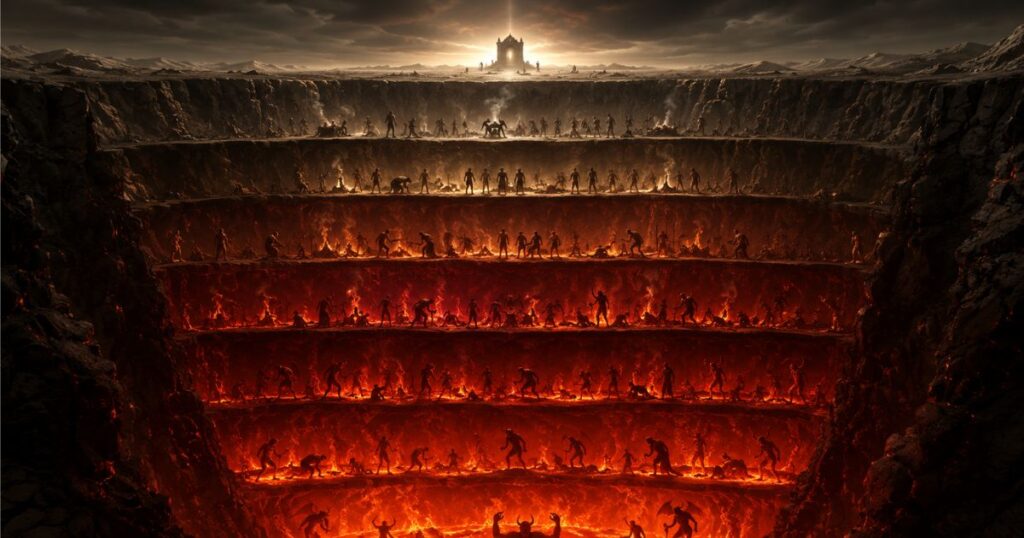
Jahannam is the Islamic name for Hell. It’s the place of accountability and punishment in the afterlife, reserved for those who reject faith or commit serious wrongs.
In Islamic eschatology (the study of the afterlife), Jahannam serves three main purposes: justice for the oppressed, deterrence from evil, and a reminder to live righteously.
Jahannam is mentioned often in the Quran scholarly counts place references to Hell at over 70 times, using different names that highlight its severity. That’s a lot of weight given to one subject.
But here’s where it gets interesting. The Quran describes Jahannam as a realm. The internal structure those seven levels is something scholars pieced together from scripture and Hadith.
What’s the Difference Between Jahannam and Naar?
People often mix up the words Jahannam and Naar, but they aren’t identical.
Jahannam is the proper name for Hell as a place. Naar literally means “the Fire” and is used more broadly throughout the Quran to describe punishment in general.
Think of it like this: Jahannam is the location, while Naar is the burning substance within it. They overlap, and the Quran sometimes uses them interchangeably—but the nuance is real.
| Term | Meaning & Usage |
| Jahannam | The proper name for Hell as a realm; refers to the place of punishment itself. |
| Naar | Means “the Fire”; used broadly in the Quran to describe the punishment and flames. |
Are the 7 Levels of Jahannam Mentioned in the Quran?
Here’s the honest answer: the Quran does not say “seven levels” word for word. What it does say is that Hell has seven gates.
In Surah Al-Hijr (15:44), the Quran states that Jahannam “has seven gates, and for each gate is a portion designated.” That’s the scriptural foundation.
So where do the levels come from? Classical scholars stepped in. Al-Dahhak, Ibn Jurayj, and Ibn Rajab Al-Hanbali interpreted these seven gates as seven descending levels, each one assigned to a particular type of sinner.
The individual names Laza, Saqar, Al-Hutamah, and others do appear in the Quran. But they show up as descriptions of the Fire, scattered across different chapters. Later scholars organized them into a clear hierarchy.
So when you read about the Jahannam levels in the Quran, remember three layers of source material: the Quranic text itself, the Hadith (sayings of the Prophet), and the tafsir (scholarly interpretation). Each plays a role.
Seven Gates vs. Seven Levels: What’s the Difference?
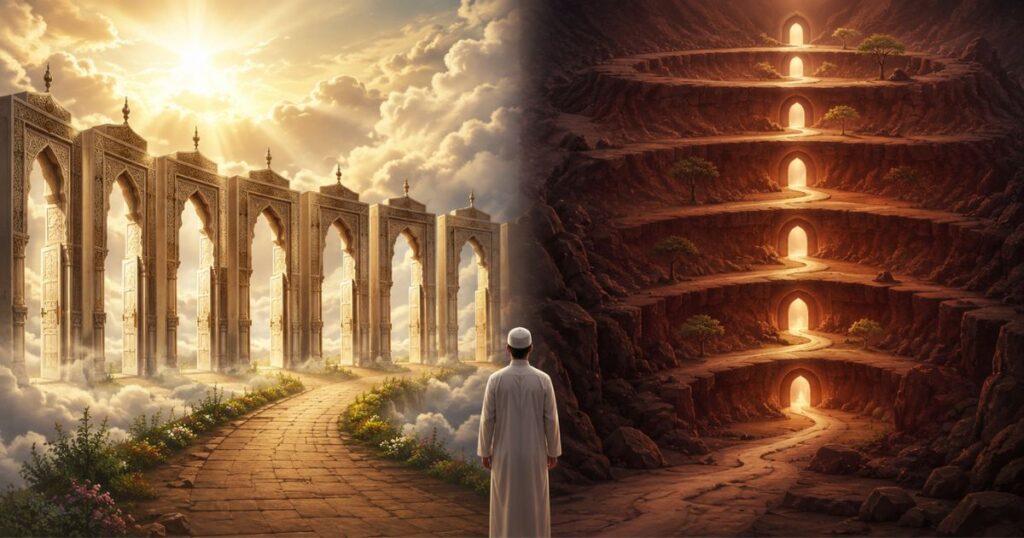
This is where confusion creeps in. The Quran says “gates” (abwāb). Scholars later spoke of “levels” (ṭabaqāt). Are they the same thing?
Many classical scholars said yes. They taught that the seven gates of Hell correspond to seven descending tiers mirroring how Paradise is described as having ascending levels.
In other words, each gate isn’t just a doorway. It’s the entrance to a deeper, more intense layer below.
This equation between gates and levels appears in classical tafsir and in works like Ibn Rajab Al-Hanbali’s Fleeing From the Fire. So when people talk about the seven gates of hell in Islam, they’re often pointing to the same framework as the seven levels.
The Names of the 7 Levels of Jahannam and Their Meanings
The names of the 7 levels of Jahannam, in descending order, are: Jahannam, Laza, Al-Hutamah, Sa’ir, Saqar, Al-Jaheem, and Al-Hawiyah.
Here’s the full picture at a glance:
| Level | Arabic Name | Meaning | Commonly Associated Inhabitants | Quranic Reference |
| 1 | Jahannam | Hell | Sinful believing Muslims | Al-Mulk (67:6–7) |
| 2 | Laza | The Blazing Flame | Those who turned away from faith | Al-Ma’arij (70:15–16) |
| 3 | Al-Hutamah | The Crusher | The greedy and hoarders | Al-Humazah (104:4–7) |
| 4 | Sa’ir | The Blaze | Serious transgressors | An-Nisa (4:10) |
| 5 | Saqar | The Scorching Fire | Those who neglected prayer and the needy | Al-Muddaththir (74:26–47) |
| 6 | Al-Jaheem | The Intense Fire | The stubborn and idolaters | At-Tawbah (9:35) |
| 7 | Al-Hawiyah | The Abyss | Hypocrites | Al-Qari’ah (101:9–11) |
Now let’s break each one down.
1. Jahannam “Hell”
This is the highest and least severe level, sharing the same name as the realm itself. Scholars commonly link it to believing Muslims who committed grave sins. Surah Al-Mulk (67:6–7) describes its terrifying roar as sinners are cast in.
2. Laza “The Blazing Flame”
Laza is a fierce, raging fire that “plucks out” those it consumes. Surah Al-Ma’arij (70:15–16) describes stripping away at the body. It’s associated with those who turned their backs on the truth.
3. Al-Hutamah “The Crusher”
The name Al-Hutamah means “that which breaks to pieces.” Surah Al-Humazah (104:4–7) describes a fire that rises over the hearts. Scholars connect it to the greedy and those who hoarded wealth selfishly.
4. Sa’ir “The Blaze”
Sa’ir is a flaming, kindled fire mentioned many times in the Quran. Surah An-Nisa (4:10) warns those who wrongfully consume the wealth of orphans that they swallow fire and will enter the Blaze.
5. Saqar “The Scorching Fire”
Saqar spares nothing and leaves nothing. Surah Al-Muddaththir (74:26–47) explains who ends up here: those who neglected prayer, ignored the needy, and denied the Day of Judgment.
6. Al-Jaheem “The Intense Fire”
Al-Jaheem is a blazing, intense fire often linked to stubborn disbelief and idolatry. Surah At-Tawbah (9:35) describes wealth hoarded against Allah being heated in this fire and used to brand its owners.
7. Al-Hawiyah “The Abyss”
Al-Hawiyah means the bottomless pit the deepest and most severe level. Surah Al-Qari’ah (101:9–11) describes it as a “mother” who embraces those whose good deeds are light. It’s widely associated with hypocrites.
Important caveat: The assignment of specific groups to specific levels comes from scholarly interpretation. It is not a unanimous, word-for-word Quranic decree, and scholars sometimes differ.
Who Goes to Each Level of Jahannam?
So, who goes where? Based on classical tafsir, here’s a simple summary:
- Jahannam: Sinful Muslims who still held faith
- Laza: Those who rejected the truth
- Al-Hutamah: The greedy and the hoarders
- Sa’ir: Serious wrongdoers and oppressors
- Saqar: Those who abandoned prayer and charity
- Al-Jaheem: Stubborn disbelievers and idolaters
- Al-Hawiyah: Hypocrites
One honest note: these classifications come from tafsir and differ between scholars. Some interpretations reserve certain levels for categories like sorcerers, the corrupt, or those who broke trust rather than entire faith groups. Treat them as scholarly guidance, not fixed certainty.
What Is the Deepest Level of Jahannam?
The deepest and most severe level of Jahannam is Al-Hawiyah the bottomless abyss.
It’s widely associated with hypocrites: people who pretended to believe while hiding rejection in their hearts. Surah An-Nisa (4:145) states plainly that “the hypocrites will be in the lowest depths of the Fire.”
That detail says something powerful. In Islamic teaching, pretending to have faith while concealing the opposite is treated as one of the gravest failings of all.
Can Muslims Leave Jahannam?
Yes and this is a comforting point many people miss. According to mainstream Sunni belief, sinful Muslims who entered Jahannam can eventually be removed through Allah’s mercy and the Prophet’s intercession (shafa’ah).
Several Hadith describe believers being taken out of the Fire once they’ve been purified of their sins, even if a single atom’s weight of faith remains in their hearts.
This stands in contrast to the punishment described for those who fully and knowingly rejected faith, which the Quran describes as lasting. So Jahannam, for believers, is not always the end of the story.
Is the 7-Levels Concept Universally Accepted?
Not entirely and it’s important to be clear about that. The seven gates are scripturally grounded in Surah Al-Hijr (15:44). But the precise naming, ordering, and population of seven levels reflects scholarly interpretation, not unanimous consensus.
Both Sunni and Shia traditions broadly agree that Jahannam exists and that the Day of Judgment is real. Where they (and individual scholars) sometimes differ is in the finer details of the levels.
Being honest about this distinction is part of treating the topic with care.
Expert Insight: How Scholars Approached the Levels of Jahannam
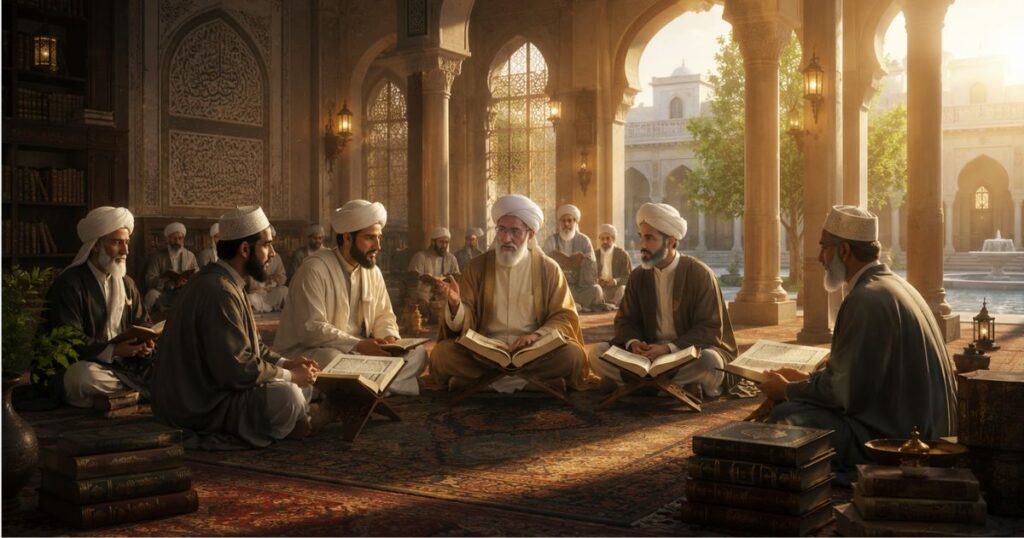
Classical scholars didn’t approach these descriptions casually. Ibn Rajab Al-Hanbali, in his famous work Fleeing From the Fire, gathered Quranic verses, Hadith, and the views of earlier scholars like Al-Dahhak and Ibn Jurayj to map out the structure of Jahannam.
Ibn Jurayj is reported to have listed Hell’s seven levels in order, beginning with Jahannam. Al-Dahhak added vivid detail, describing Hell as utterly black its fire, water, and trees all darkness.
Many scholars viewed these vivid descriptions as both literal warnings and powerful reminders designed not to terrify for its own sake, but to inspire people toward righteous living.
That balance between fear and hope sits at the heart of how Islam frames Jahannam.
Conclusion
The concept of the 7 levels of Jahannam highlights the seriousness of accountability in Islam. While Jahannam represents divine punishment, Islam also emphasizes Allah’s mercy, forgiveness, and the opportunity for repentance. Muslims are encouraged to focus on good deeds, sincere faith, and seeking Allah’s forgiveness to attain success in this life and the Hereafter.
FAQs
How many levels of hell are there in Islam?
Islamic scholars describe seven levels of Hell, based on the Quran’s mention of seven gates in Surah Al-Hijr (15:44). Each gate is understood as the entrance to a descending level, with each one more severe than the last.
What are the 7 levels of Jahannam in Islam?
The 7 levels of Jahannam are Jahannam, Laza, Al-Hutamah, Sa’ir, Saqar, Al-Jaheem, and Al-Hawiyah. Each name appears in the Quran as a description of the Fire and was organized into a hierarchy by classical scholars.
Are the seven levels of Jahannam in the Quran?
The Quran mentions seven gates of Hell (Surah Al-Hijr 15:44), not “seven levels” in those exact words. The seven-levels framework comes from tafsir and Hadith, where scholars equated the gates with descending tiers.
What is the difference between Jahannam and Naar?
Jahannam is the proper name for Hell as a place, while Naar literally means “the Fire” and is used more broadly in the Quran. The two often overlap but carry slightly different shades of meaning.
Is Jahannam eternal for everyone?
No. Mainstream Sunni belief holds that sinful Muslims may eventually leave Jahannam through Allah’s mercy and the Prophet’s intercession. Lasting punishment is described for those who fully rejected faith.
What is the lowest level of Jahannam?
The lowest and most severe level is Al-Hawiyah, the bottomless abyss. It’s widely associated with hypocrites, based on Surah An-Nisa (4:145), which places them in the lowest depths of the Fire.