
The beauty of Islam comes from its simplicity, mercy, and consistency: one God, no intermediaries, a clear path of worship (the Five Pillars), and a scripture the Quran believed to be preserved word-for-word since the 7th century. It shows up in daily prayer, in acts of charity, in Islamic art and calligraphy, and in a community (the ummah) built around equality and shared purpose.
What Does “The Beauty of Islam” Really Mean?
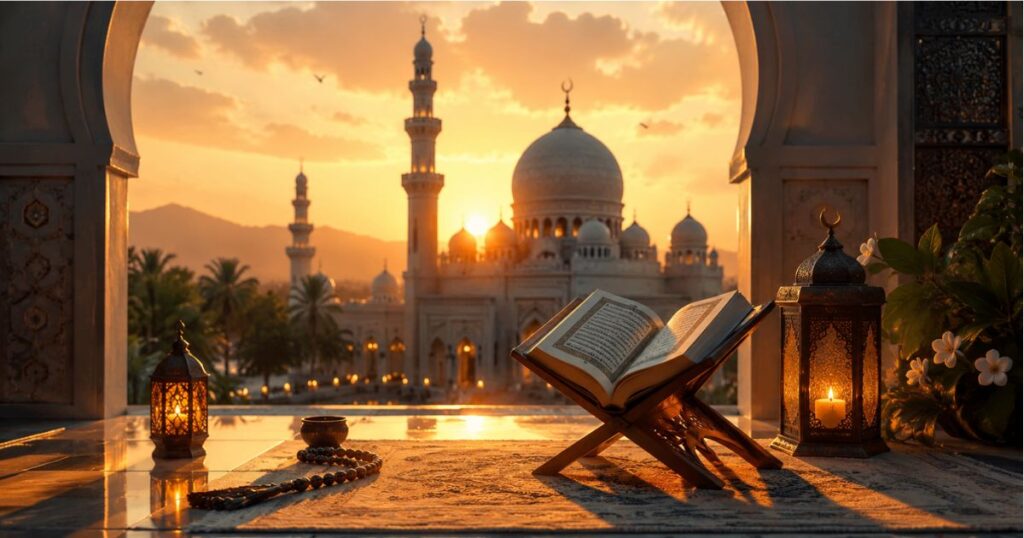
Islam is the belief that there is one God (Allah), and that human beings find peace by submitting to His guidance. The word “Islam” itself comes from the Arabic root s-l-m, related to both “submission” and “peace” the idea that true peace comes from surrendering worry and control to a Creator who knows more than we do.
When people talk about the “beauty of Islam,” they’re usually pointing at one of a few things: the elegance of its core belief, the rhythm of its daily practices, the poetry of the Quran, or the warmth of its community life. This guide covers all four.
The Oneness of God Islam’s Simplest, Deepest Beauty
At the center of Islam is Tawhid the oneness of God. There’s no complicated hierarchy, no intermediary required between a person and their Creator. Every Muslim can pray directly to Allah, anytime, anywhere.
This matters more than it might sound. A single, undivided concept of God means:
- No confusion about who to worship. God has no partners, no children, no rivals.
- No middleman. You don’t need a priest or a ritual gatekeeper to reach God. Prayer is between you and Him.
- Consistency across the tradition. Every prophet in Islamic belief Adam, Noah, Abraham, Moses, Jesus, and finally Muhammad ﷺ taught the same core message: worship one God.
The Quran describes this directly: “Say, He is Allah, [who is] One” (Quran 112:1) a verse so central that many Muslims memorize the entire chapter, Surah Al-Ikhlas, as children.
The Five Pillars as an Expression of Beauty
The Five Pillars of Islam aren’t a checklist of obligations, they’re a rhythm. Each one turns belief into something you actually do, every day or at set points in your life.
1. Shahadah The Declaration of Faith
The simple testimony that there is no god but Allah, and Muhammad is His messenger. It’s the doorway into Islam a single sentence, spoken with sincerity. (See our step-by-step Shahada guide if you’re ready to take this step.)
2. Salah Five Daily Prayers
Muslims pause five times a day, facing Mecca, to pray. It’s a built-in reset a structured way to stay connected to purpose throughout an ordinary day. (New to prayer? Our Prayer Guide walks through it step by step.)
3. Zakat Charitable Giving
A fixed portion of wealth (typically 2.5% of savings annually) given to those in need. It’s not optional generosity, it’s baked into the faith as an obligation.
4. Sawm Fasting in Ramadan
A month of fasting from dawn to sunset, practiced by over a billion people simultaneously. It builds empathy for the hungry and discipline over impulse.
5. Hajj Pilgrimage to Mecca
Once in a lifetime, if able, Muslims travel to Mecca where distinctions of wealth and nationality disappear, and everyone wears the same simple garments.
Self-contained answer: The Five Pillars of Islam are Shahadah (faith declaration), Salah (five daily prayers), Zakat (charity), Sawm (fasting in Ramadan), and Hajj (pilgrimage to Mecca). Together, they turn belief into daily, lived practice rather than an abstract idea.
The Beauty of the Quran
Muslims believe the Quran was revealed to the Prophet Muhammad ﷺ over roughly 23 years and has been preserved, word for word, ever since memorized by millions and cross-checked across generations.
A few things stand out about it, from both a devotional and a literary standpoint:
- Its language. Classical Arabic scholars have long pointed to the Quran’s rhythm and structure as unmatched in Arabic literature, one reason it’s traditionally recited aloud, not just read silently.
- Its consistency. The text Muslims read today matches manuscripts from the earliest centuries of Islam, which believers point to as evidence of careful preservation.
- Its accessibility. Unlike many ancient religious texts, the Quran speaks in direct, practical terms about daily life, patience, honesty, family, and justice, not just abstract theology.
The Quran describes itself this way: “This is the Book about which there is no doubt, a guidance for those conscious of Allah” (Quran 2:2).
Mercy, Peace, and Justice The Heart of Islamic Character
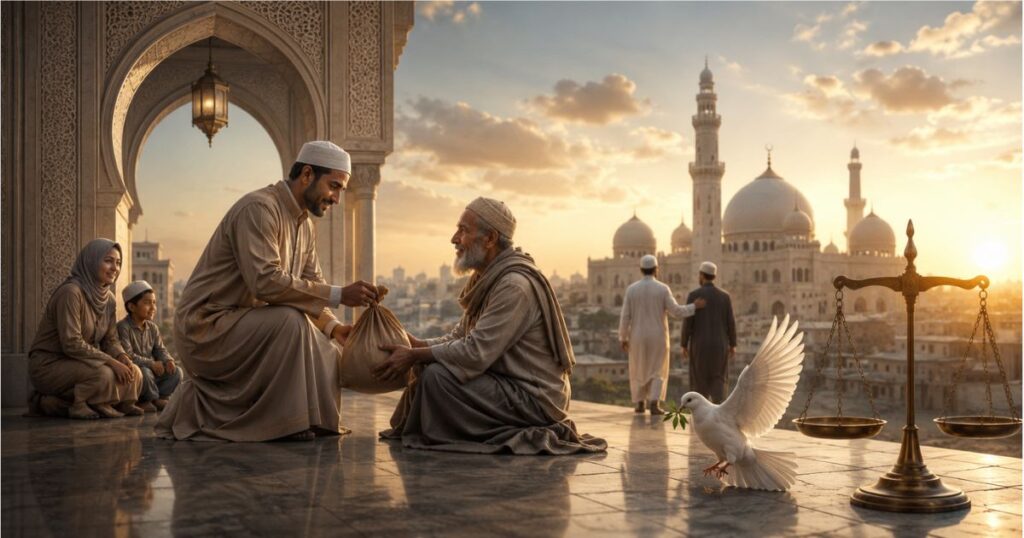
Islamic teaching returns again and again to a small set of values that shape how Muslims are meant to treat others.
| Value | What It Looks Like in Practice |
| Mercy (Rahmah) | Every chapter of the Quran but one opens with “In the name of Allah, the Most Merciful, the Especially Merciful.” |
| Peace (Salam) | Muslims greet each other with “As-salamu alaykum” “peace be upon you” dozens of times a day. |
| Justice (‘Adl) | The Quran instructs believers to stand firm for justice, even against their own interests or family. |
| Patience (Sabr) | Framed not as passive waiting, but as steady, active endurance through hardship. |
| Gratitude (Shukr) | A core spiritual discipline noticing and naming what’s good, even in difficulty. |
Self-contained answer: Islam centers on mercy, peace, justice, patience, and gratitude as everyday practices, not abstract ideals. These values shape how Muslims are taught to speak, greet one another, handle conflict, and respond to hardship.
What Makes Islam Different From Other Faiths?
This is a common question, and it deserves a fair, non-dismissive answer. For a broader look at core Islamic belief, see our What Is Islam page.
Islam shares a common ancestor with Judaism and Christianity all three trace back to Abraham, and all affirm belief in one God. What Islam emphasizes distinctly is a direct, unmediated relationship with God: no clergy required to forgive sin, no concept of inherited guilt, and a belief that every person is born spiritually clean (fitrah) and remains fully responsible for their own choices.
Islam also holds that the Quran is the final, unaltered revelation in a line that includes the scriptures given to Moses and Jesus meaning Muslims respect those earlier messengers while believing the Quran completes and clarifies the message.
This isn’t decoration for its own sake in Islamic tradition, beauty in art is often connected to ihsan, the idea of doing things with excellence, as if you can see God, because He sees you. (Curious to learn more of the fundamentals behind this worldview? Browse our Learning Library.)
The Cultural Beauty of Islam Art, Calligraphy, and Architecture
Because Islamic tradition historically discouraged depicting God or the Prophet ﷺ in images, Muslim artists channeled creative energy elsewhere and the results became some of the most recognizable art forms in the world.
- Calligraphy. Because the Quran is central and untranslatable in its original form for religious purposes, Arabic script itself became art elaborate, geometric, sometimes woven into shapes and patterns.
- Architecture. Domes, minarets, and intricate tilework from the Alhambra in Spain to the Blue Mosque in Istanbul reflect mathematical precision paired with spiritual symbolism.
- Geometric pattern. Repeating, infinite-seeming patterns are common in Islamic design, often read as a visual metaphor for the infinite nature of God.
This isn’t decoration for its own sake in Islamic tradition, beauty in art is often connected to ihsan, the idea of doing things with excellence, as if you can see God, because He sees you.
How Muslims Experience This Beauty Today
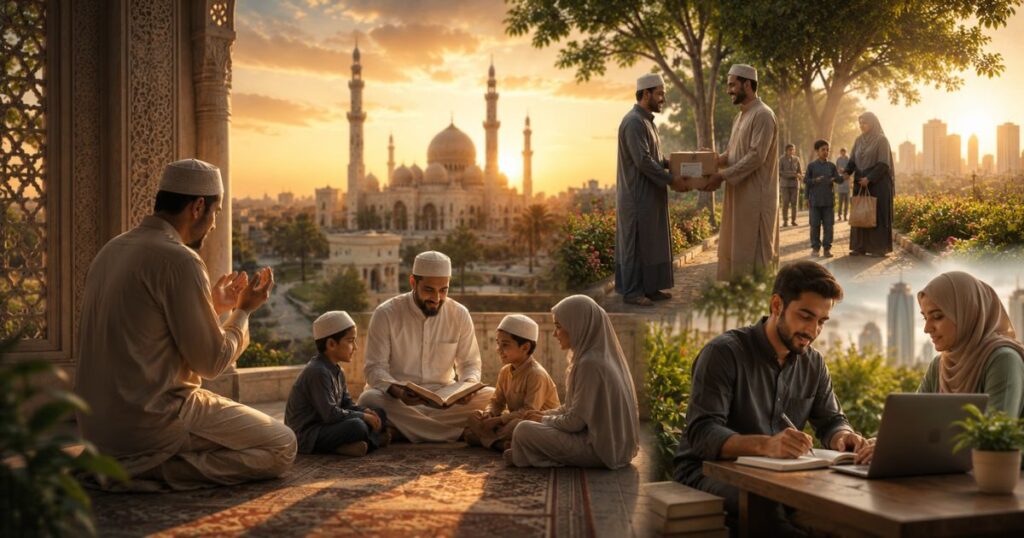
Beyond theology and history, this faith shows up in small, daily moments the quiet of praying before sunrise, the discipline of fasting through a workday, the relief of saying “Alhamdulillah” (praise be to God) after something goes right, or the comfort of turning to prayer when something goes wrong.
A note for publishers: this is the strongest place to add your brand’s own voice, a real convert story, a community member’s reflection, or a first-hand account of what this practice means day to day. Genuine, first-person testimony will outperform generic description here for both reader trust and AI/search credibility. If you have real quotes or stories to share, this section is where they belong.
What’s consistent across many personal accounts from lifelong Muslims and converts alike is a sense that the structure of the faith (fixed prayer times, a shared fasting month, a single direction to face in prayer) creates rhythm and belonging that’s hard to replicate outside of it. You can hear these accounts directly in our Revert Stories, where people from around the world share how they found their way to Islam.
Conclusion
Business Intelligence (BI) and analytics services are no longer optional for organisations that want to compete with data-driven decision-making. The right BI partner can help you unify data, uncover actionable insights, automate reporting, and improve business performance across every department. Before choosing a provider, evaluate scalability, integration capabilities, security, support, and total cost of ownership to ensure your investment delivers measurable value in 2026 and beyond.
If any of this resonates with you, you don’t have to figure it out alone Start Your Journey with a simple, guided introduction, browse our FAQs for common questions, or explore more articles on the blog.
FAQs
What makes Islam beautiful?
Islam’s beauty is often traced to its simplicity (one God, no intermediaries), its built-in daily practices (the Five Pillars), and its emphasis on mercy, peace, and justice in how people treat one another.
What are the Five Pillars of Islam?
The Five Pillars are Shahadah (declaration of faith), Salah (five daily prayers), Zakat (charity), Sawm (fasting during Ramadan), and Hajj (pilgrimage to Mecca).
What is the beauty of the Quran?
Muslims view the Quran as beautiful for its preserved, unaltered text, its rhythmic classical Arabic, and its practical guidance on everyday life not just abstract theology.
How does Islam bring peace to its followers?
Through direct connection to God without intermediaries, a fixed rhythm of daily prayer, and teachings that emphasize gratitude, patience, and trust in God’s plan during hardship.
What is unique about Islam compared to other religions?
While Islam shares Abrahamic roots with Judaism and Christianity, it emphasizes an unmediated relationship between each individual and God, along with a belief that the Quran is the final, preserved revelation.
Why do Muslims say “As-salamu alaykum”?
It means “peace be upon you” and reflects Islam’s central emphasis on peace Muslims exchange this greeting multiple times daily as both a social custom and a spiritual reminder.