
Islam is one of the world’s fastest-growing religions, followed by over a billion people across the globe. Understanding the facts about Islam helps clear misconceptions and builds a deeper appreciation of its values, beliefs, and practices. From its rich history to daily rituals like prayer and charity, Islam offers guidance for both spiritual and social life. In this blog, we’ll explore simple, authentic, and interesting facts that give you a clearer picture of this beautiful faith.
What Is Islam, In Simple Terms?
Let’s keep this really simple. When people look for facts about Islam, they’re usually asking one big thing: “What is Islam, really?” Islam is a major world religion where Muslims believe in one God and try to live a good, honest life that pleases Him. The word “Islam” means surrender and peace, and a Muslim is someone who chooses to surrender to God and follow His guidance.
If you like easy facts about Islam, here are a few to remember:
- Islam is a monotheistic religion, which means Muslims believe in just one God.
- It started in the 7th century with a man named Muhammad, who Muslims see as the final prophet in a long line that includes figures like Abraham and Moses.
- The main book of Islam is called the Quran, which Muslims believe is God’s message, telling them how to believe, behave, and treat others
Where and How Did Islam Begin?
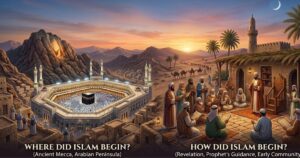
To really understand the facts about Islam, it helps to know where it all started. Around 1,400 years ago, in a busy desert city called Mecca, a man named Muhammad began receiving messages that Muslims believe came directly from God. These messages were later collected in the Quran, the main holy book of Islam, and they still guide Muslims today.
Here are a few simple facts about Islam and its beginnings you can keep in mind:
- Islam began in the 7th century on the Arabian Peninsula, not in a single moment, but over about 23 years as the messages were revealed.
- Muhammad is seen as the final prophet in a long chain that includes Noah, Abraham, Moses, and Jesus, which is why Islam is called an Abrahamic faith.
- The early Muslim community first grew in Mecca, then moved to a city called Medina, where many of the core beliefs and practices took shape.
When you look for facts about Islam, you’re not just reading about rules and rituals. You’re learning the story of a faith that started with one man, one message, and a call to worship one God and live with justice and compassion.
Who Do Muslims Believe God Is?
When people search for facts about Islam, one of the first questions that pops up is, “Who exactly do Muslims believe in?” Muslims believe in one God, the same single Creator of everyone and everything. They don’t believe in many gods or spirits; just one, all‑powerful, all‑knowing God who cares about every person’s life and choices. For Muslims, God is not a distant force. He listens, guides, and responds when people turn to Him with honesty and hope.
Here are a few simple facts about Islam that make this easy to remember:
- Muslims believe God has no partners, no children, and no equals.
- They believe He is merciful and just, so good actions and bad actions both matter.
- They believe God sent prophets, like Abraham, Moses, Jesus, and finally Muhammad, to teach people how to live well.
So when you hear facts about Islam that talk about prayer, kindness, or rules, it all goes back to this one idea: there is one loving God, and Muslims are trying—imperfectly, like all humans—to live in a way that pleases Him
What Do Muslims Actually Believe? (Core Beliefs)
Now that you know where Islam began, let’s talk about what Muslims actually believe. When people look up facts about Islam, they’re usually trying to figure out, “What’s at the heart of this faith?” At the core, Muslims believe in one God, His prophets, His books, angels, an afterlife, and a Day of Judgment where everyone is held responsible for what they did in life. That might sound big and heavy, but think of it like this: life has a purpose, your choices matter, and nothing good you do is ever wasted.
Here are a few key facts about Islam you can picture clearly:
- Muslims believe God sent many prophets, including Noah, Abraham, Moses, Jesus, and finally Muhammad, all teaching people to worship one God and do good.
- They believe the Quran is God’s final message, and it gives guidance on belief, kindness, family, money, and even how to treat strangers.
- They believe there is life after death, where God judges fairly, rewards good, and holds people accountable for harm.
The Five Pillars of Islam: How Faith Looks in Daily Life
If you want facts about Islam that really show how Muslims live, the Five Pillars are where everything comes together. Think of them as five big habits that help a Muslim stay close to God and kind to people every single day. These aren’t random rules. They’re simple, repeated actions that shape a person’s heart, character, and lifestyle in a very real way.
Here are the Five Pillars in easy language:
- The first pillar is a short statement of faith, saying you believe in one God and that Muhammad is His messenger.
- The second is prayer, five times a day, as quick little “check‑ins” with God spread through morning, noon, afternoon, evening, and night.
- The third is charity, giving a set share of your wealth each year to help people in need.
- The fourth is fasting in the month of Ramadan, going without food and drink from dawn to sunset to build patience, empathy, and self‑control.
- The fifth is pilgrimage to Mecca at least once in a lifetime, if you’re healthy and can afford it.
Beyond the Pillars: Everyday Muslim Values and Ethics
So far, you’ve seen facts about Islam that talk about beliefs and big acts of worship. But here’s something just as important: Islam is also about how you treat people when nobody’s watching. Muslims are taught that faith is not real if it doesn’t show up in everyday behavior—at home, at work, at school, even online. That means telling the truth, keeping promises, being fair with money, and showing mercy, not just during prayer, but all day long.
Here are a few everyday facts about Islam that often get missed:
- Being kind to parents, family, neighbors, and even strangers is seen as a major part of worship.
- Cheating, bullying, and harming innocent people are clearly wrong and considered serious sins.
- Helping the poor, feeding the hungry, and standing up for justice are not “extra credit”; they’re central to living as a good Muslim.
Islam in the United States: The Big Picture
When you look for facts about Islam, it’s easy to imagine it only “belongs” somewhere far away. But Islam is very much part of American life too. Muslims have lived in the United States for centuries, from some of the earliest enslaved Africans to today’s doctors, teachers, shop owners, and students. You’ll find mosques in big cities and small towns, and you’ll meet Muslims in nearly every field you can think of, from medicine and tech to sports and public service.
Here are a few simple facts about Islam in America that might surprise you:
- Islam is among the largest minority religions in the United States, with millions of Muslims calling this country home.
- American Muslims are incredibly diverse—Black, White, Arab, South Asian, Latino, and more—so there is no single “Muslim look.”
- Many Muslims are born in the U.S., and a significant number are converts who chose Islam as adults.
Who Are American Muslims? (Diversity You Don’t See on TV)
When people search for facts about Islam, they often picture one kind of “Muslim,” but real American Muslims don’t fit into a single box. In the United States, Muslims come from many backgrounds—Black, White, Arab, South Asian, Latino, and more—which makes them one of the most ethnically diverse faith communities in the country. Some have roots going back generations in America, while others are first‑generation immigrants who moved for school, work, or safety.
Here are a few eye‑opening facts about Islam in the U.S. you can remember:
- There are millions of Muslims in America, but they make up only a small percentage of the total population, so you might know Muslims without even realizing it.
- Many Muslims are born and raised in the U.S., and a noticeable number are converts who chose Islam after exploring it for themselves.
- American Muslims are students, business owners, engineers, nurses, artists, and everything in between, living in states like New York, California, Illinois, Texas, and far beyond
What Is Muslim Life Like in America Day to Day?
When you look past headlines and focus on real facts about Islam in the U.S., you find something surprisingly normal: Muslim life in America looks a lot like everyone else’s, just with extra faith built into the daily schedule. Many Muslims wake up early, squeeze in a quick morning prayer, rush to school or work, answer emails, sit in traffic, help kids with homework, and binge their favorite shows—just like you. The difference is that, five times a day, they pause for prayer, try to avoid what their faith considers harmful, and look for chances to do quiet good, like helping a neighbor or giving charity.
Here are a few everyday facts about Islam in American life that help you picture it:
- A Muslim student might quietly pray during lunch break, then head right back to class or sports practice.
- During Ramadan, Muslims still work and study but fast from food and drink in daylight hours, then enjoy warm evening meals with family and friends.
- Weekends can include mosque visits, kids’ Quran classes, volunteering, and big community dinners that feel a lot like a family reunion, just with more samosas and smiles.
What Does Islam Really Say About Peace, Violence, and Terrorism?
When people search for facts about Islam, this is often the question hiding underneath: “Is Islam peaceful, or is it violent?” Let’s talk about it plainly. Islam teaches that life is precious, that hurting innocent people is a major sin, and that justice must always be balanced with mercy. The overwhelming message is: protect the weak, stand up to real harm, but do not cross the line into cruelty or revenge.
Here are some calm, clear facts about Islam on this topic:
- Ordinary Muslims around the world—and in America—pray, work, raise families, and want safety just like everyone else; they are not living for conflict.
- Terrorist groups twist religious language to justify violence, but their actions go against core Islamic teachings on protecting civilians and honoring human life.
- Muslim scholars, leaders, and everyday believers regularly speak out against terrorism, even if those statements don’t always make the news.
Does Islam Oppress Women? Facts vs Myths
One of the toughest questions in facts about Islam is about women. You might hear that Islam holds women back, but let’s look at what the faith actually teaches versus what some cultures do. Islam says men and women are equal in the eyes of God—both get the same spiritual rewards for good choices and face the same judgment for mistakes. Women have rights to own property, go to school, work, and say no to marriage if they want.
Here are a few straight facts about Islam that clear up the confusion:
- The faith gave women inheritance and divorce rights over 1,400 years ago, long before many places caught up.
- The headscarf, or hijab, is a choice for modesty that many American Muslim women make proudly, just like some choose not to wear it.
- Today, Muslim women in the U.S. are doctors, lawyers, athletes, and moms, often balancing faith and freedom in ways that feel right for them.
Do Muslims Worship Muhammad? What About Jesus?
People often wonder about this when checking facts about Islam: “Do Muslims worship Muhammad or Jesus?” The answer is a clear no—they worship only God. Muhammad is loved and respected as the final prophet who brought God’s message, but he’s human, not divine. Muslims follow his example of kindness and honesty, just like they honor earlier prophets.
Here are a couple of straightforward facts about Islam to settle this:
- Muslims say a simple prayer of faith that praises God alone and names Muhammad as His messenger—no worship there.
- Jesus holds a special place too—he’s seen as a great prophet born to a virgin, who did miracles and will return one day, but again, not God.
Islam and Other Faiths: Can You Be Muslim and Respect Other Religions?
One of the best facts about Islam is how it connects to other beliefs. Muslims see themselves as part of a big family of faiths that all worship the same one God—think Judaism, Christianity, and Islam sharing roots with Abraham. The faith teaches respect for people of other religions, saying there’s no forcing anyone to believe anything. You’re free to follow your heart, and so are they.
Here are a few warm facts about Islam that show this openness:
- The holy book calls Jews and Christians “People of the Book,” honoring their prophets and scriptures as part of God’s plan.
- Muslims are told to treat neighbors kindly, no matter their faith, and even protect places of worship like churches and synagogues.
- History shows times when Muslims lived side by side with others in peace, sharing cities and celebrating differences.
Misconceptions About Islam in the U.S.—And the Facts Behind Them
You’ve probably heard some wild ideas about facts about Islam, especially living in America where news can twist things fast. Let’s knock down the biggest ones with straight talk and real answers that cut through the fog. These myths hurt good people and keep us from seeing neighbors as they are.
Here are the top facts about Islam that bust common mix-ups:
- Myth: “Islam promotes terrorism.” Truth: The faith forbids harming innocents; extremists twist words, but most Muslims condemn that garbage loud and clear.
- Myth: “Muslims can’t be loyal Americans.” Truth: Millions serve in the military, vote, and build businesses here—proud citizens who love this country.
- Myth: “Islam hates freedom.” Truth: It teaches personal choice in faith, with “no compulsion” as a core rule—live and let live.
Islam in Numbers: Quick Facts for Curious Readers
Want some hard facts about Islam you can share at dinner? Let’s look at the numbers—they tell a story of growth, faith, and everyday devotion that might surprise you. These stats show Islam isn’t just ancient history; it’s alive and growing right here and around the world.
Here are bite-sized facts about Islam with real figures:
- Globally, there are about 2 billion Muslims, making Islam the second-largest religion after Christianity.
- In the U.S., around 4 million Muslims live across all 50 states, with the biggest communities in places like New York, California, and Texas.
- Most American Muslims pray daily, and nearly all fast during Ramadan, blending faith into busy modern lives.
Lived Islam in America: Stories and Contributions
Ever wonder how facts about Islam show up in real American lives? Picture everyday heroes: a Muslim doctor saving lives in a Chicago ER, a teacher in Texas inspiring kids with history lessons, or an engineer in California designing bridges that connect communities. These aren’t just jobs—they’re ways Muslims give back, blending faith with action.
Here are a few heartwarming facts about Islam from U.S. stories:
- Famous faces like boxer Muhammad Ali or athlete Ibtihaj Muhammad broke barriers, showing grit and grace on global stages.
- Muslim-led charities raise millions yearly for disaster relief, food banks, and schools, helping friends and strangers alike.
- From tech startups to community gardens, Muslims build and share, proving faith fuels creativity and care.
Islam, Human Rights, and Modern Issues
When digging into facts about Islam, you might wonder how it fits with today’s talk of rights and freedoms. Good news: most American Muslims see their faith as a perfect match for human rights, democracy, and living well in a diverse world. They vote, volunteer, and speak up for justice, blending old wisdom with new challenges.
Here are a few hopeful facts about Islam on this front:
- Surveys show the vast majority of U.S. Muslims support religious freedom, equal rights, and peaceful change through the ballot box.
- Many champion women’s education, fair wages, and care for refugees—values straight from the faith’s call to dignity for all.
- Debates inside Muslim circles keep the conversation alive, from climate action to tech ethics, proving faith grows with the times.
Conclusion
Understanding the facts about Islam helps remove common misunderstandings and promotes respect among different cultures and beliefs. It is a religion built on peace, compassion, and strong moral values that guide millions of people every day. From daily prayers to acts of charity, Islam teaches balance between faith and life. Learning about it opens doors to better global understanding. In the end, knowledge leads to tolerance and mutual respect.
FAQ
What are the key beliefs in Islam?
Islam is based on belief in one God (Allah), angels, holy books, prophets, the Day of Judgment, and divine destiny. These core beliefs shape a Muslim’s faith and actions.
What is the holy book of Islam?
The Quran is the holy book of Islam, believed to be the word of Allah revealed to Prophet Muhammad (PBUH). It provides guidance on all aspects of life.
What are the main practices in Islam?
The main practices are the Five Pillars of Islam: faith, prayer, charity, fasting during Ramadan, and pilgrimage to Makkah. These form the foundation of a Muslim’s daily life.