
Dyeing your hair is generally not considered haram in Islam. Many Islamic scholars agree that changing hair color is permissible as long as the dye does not contain harmful substances and is used for lawful purposes. The Prophet Muhammad ﷺ encouraged covering gray hair with natural dyes such as henna. However, some scholars discourage or prohibit using pure black dye in certain situations, particularly when it is intended to deceive others about one’s age.
The Short Answer What Islam Says About Hair Dye
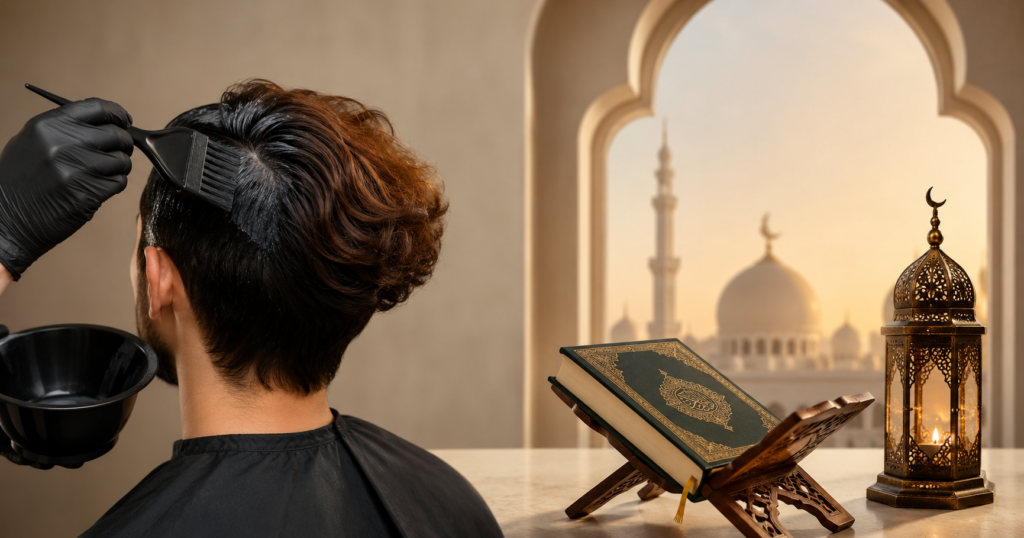
So, is it haram to dye your hair? For most people, the answer is no. Coloring your hair is treated as a normal form of beautification, which Islam allows. You can cover gray, switch up your look, or simply enjoy a fresh color.
The teaching on hair dye in Islam even has a positive side. There are reports that the Prophet Muhammad (peace be upon him) encouraged dyeing gray hair to look different from certain groups of his time. So coloring isn’t just “okay” sometimes it’s actually praised.
The one big catch? Pure black dye. That’s where the debate lives, and we’ll break it down fully below. Everything else mostly comes down to your intention and the color you pick. For more Islamic rulings on daily life questions for new Muslims, browse The Revert Blog.
Is Dyeing Hair Halal or Haram? The Core Ruling
To understand the ruling, it helps to know three simple words scholars use:
- Halal permissible, totally fine to do.
- Haram forbidden, you should not do it.
- Makruh disliked, not sinful but better to avoid.
Most hair coloring lands in the halal zone. A few situations slide toward makruh or haram, depending on the color and your reason for doing it. So is it halal to dye hair? Yes within sensible limits.
The point Islam keeps coming back to is balance. Beautify yourself, but stay honest, modest, and avoid copying things that go against your values.
When Dyeing Your Hair Is Permissible (Halal)
You’re generally on safe ground when you:
- Cover gray hair with natural-looking colors
- Use henna or other plant-based dyes
- Choose red, brown, or blonde shades
- Color your hair to look neat and presentable
When Dyeing Your Hair Becomes Forbidden (Haram)
Things shift into risky territory when you:
- Use pure black dye to hide age (the main exception)
- Imitate a specific look tied to beliefs or behavior you shouldn’t copy
- Color your hair purely to show off in an immodest way
Mini-summary: Most coloring is fine. Watch out for pure black and copying things you shouldn’t.
Why Is Black Hair Dye Considered Haram?
This is the question that fills forums and comment sections. Why single out black when every other color gets a pass?
The reason traces back to specific sayings of the Prophet Muhammad (peace be upon him), known as hadith recorded reports of his words and actions. These reports speak directly about black dye, which is why scholars treat it differently from every other shade.
What the Hadith Say About Black Dye
When an elderly companion with white hair was brought to the Prophet (peace be upon him), he reportedly said:
“Change this, but avoid black.” (Narrated in Sahih Muslim)
In plain English: go ahead and color the gray just don’t make it jet black.
There’s an even stronger warning:
“There will be people at the end of time who will dye their hair black… they will not even smell the fragrance of Paradise.” (Narrated by Abu Dawud)
That’s serious language. It’s the main reason why black hair dye is considered haram in Islam by most scholars.
Are There Any Exceptions to the Black Dye Rule?
Here’s where nuance matters. The concern is pure, jet black the kind used to fake youth or hide age entirely. A dark color that isn’t true black is viewed more leniently.
For example, mixing henna with a plant called katam creates a reddish-black tone not pure black. Many scholars consider that blend perfectly fine. So a dark brown isn’t the same problem as coal black.
What Hair Colors Are Allowed in Islam?
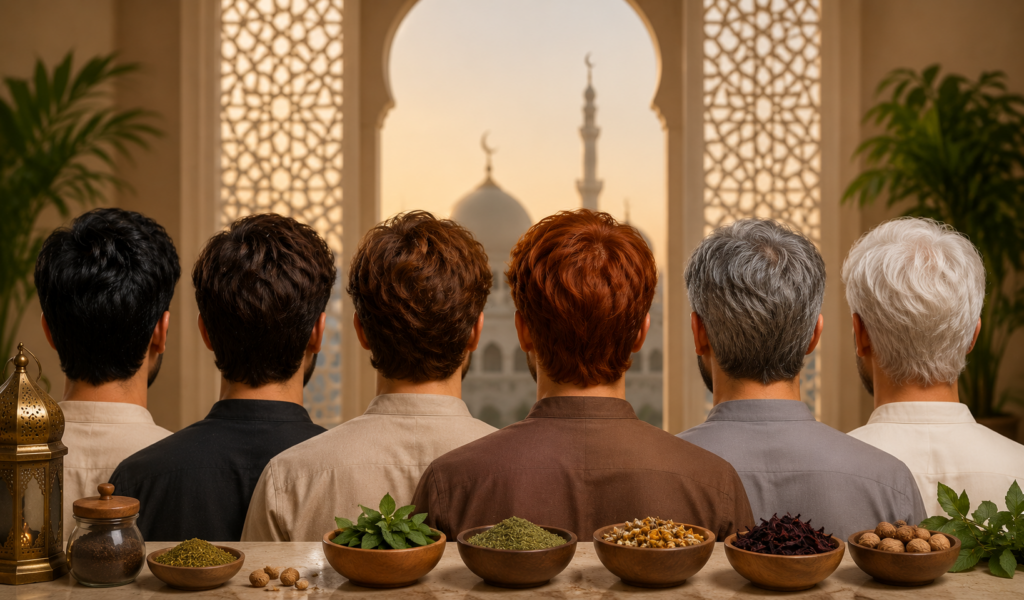
Wondering which shades get the green light? Here’s a quick, color-by-color breakdown so you don’t have to guess.
| Hair Color | Ruling | Notes |
| Red / reddish | Permissible | Encouraged in hadith |
| Brown | Permissible | Common natural choice |
| Blonde | Permissible | Avoid copying-others intent |
| Henna (orange-red) | Recommended | Prophetic preference |
| Blue / green / unnatural | Conditional | Avoid imitation and immodesty |
| Pure black | Forbidden/discouraged | Direct hadith warning |
Takeaway: Almost every natural color is fine. Bright fashion colors come down to intention and context pure black is the one clear exception.
Temporary vs Permanent Hair Dye in Islam
A lot of people assume permanent dye is somehow “more haram” than a wash-out color. That’s a myth. Islam doesn’t rank dye by how long it lasts it looks at the color and your intention.
So whether your color fades in a week or sticks for months, the same basic rules apply.
| Dye Type | General Ruling | Key Consideration |
| Temporary / wash-out | Permissible | No lasting change |
| Semi-permanent | Permissible | Same color rules apply |
| Permanent (chemical) | Permissible | Color rules + a quick wudu check |
Does the Type of Dye Change the Ruling?
Not really. A temporary blue and a permanent blue are judged the same way. What changes is one practical detail: permanent chemical dyes can sometimes form a coating, which matters for washing before prayer. We’ll cover that next.
Bottom line: Permanence doesn’t decide halal or haram. Color and intention do.
Is Bleaching Your Hair Haram?
Bleaching gets almost no attention online, so let’s fix that. Is bleaching your hair haram? In most cases, no.
Bleach simply lightens your natural color, so scholars treat it like any other color change. Going a few shades lighter is generally fine.
Keep these points in mind:
- Lightening to a natural tone permissible
- Avoid copying a look tied to things you shouldn’t imitate
- Steer clear of extreme results meant to draw improper attention
A common mistake is assuming bleach is automatically forbidden. It isn’t. Treat it like choosing a lighter shade and you’re fine.
Can You Pray With Dyed Hair? Hair Dye and Wudu Explained
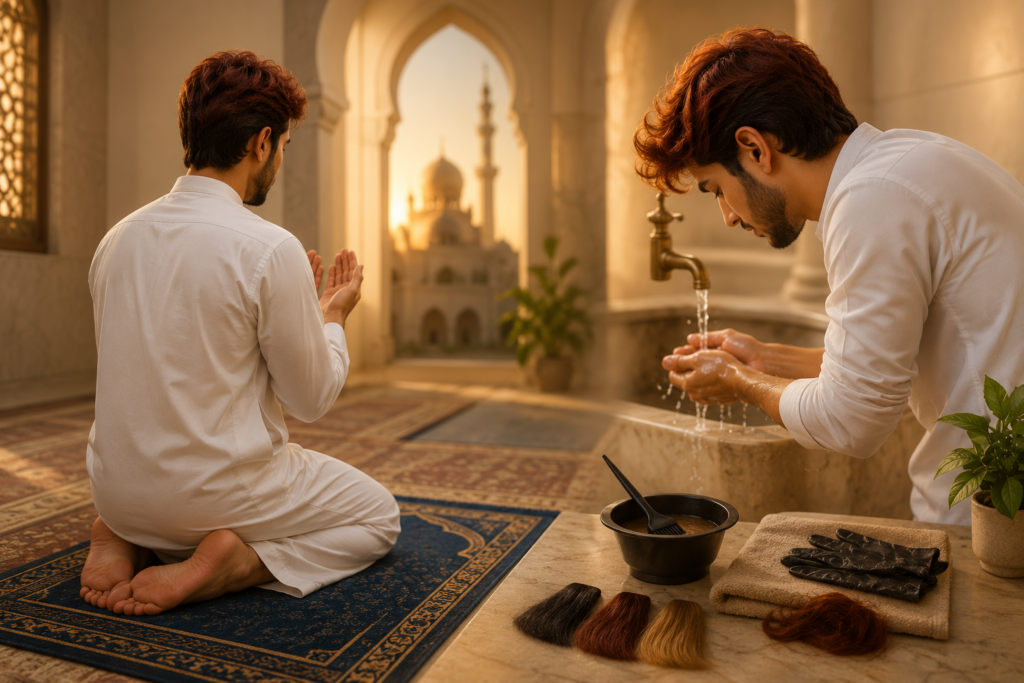
This is a brilliant question that almost no article answers. Short version: yes, you can pray with dyed hair. Most dyes don’t affect your prayer at all.
The only thing to think about is wudu the washing you do before prayer. For wudu to count, water needs to reach your skin and hair. So the real question isn’t the color. It’s whether the dye blocks water. For new Muslims still learning how to perform Wudu correctly, our complete guide on how to pray as a Muslim covers every step of the purification process in plain English.
Does Hair Dye Affect Wudu?
Here’s the simple logic:
- The concern is dye that forms a waterproof layer on your hair
- Most regular dyes soak in and don’t create a barrier
- Henna stains the hair rather than coating it widely considered fine
- Think nail-polish-style coatings that’s the kind to watch for
Picture two things: a marker stain that sinks into paper versus a sticker stuck on top. Most dyes act like the stain. A thick, plasticky coating acts like the sticker and that’s the only real issue.
How to Make Sure Your Wudu Is Valid
Use this quick checklist before you color:
- Pick a dye that absorbs into the hair, not one that coats it.
- Avoid thick, sealed layers like a paint or film.
- Make sure water still reaches your scalp during wudu.
- If unsure, ask a knowledgeable scholar about your specific product.
Mini-summary: Normal dye = no problem. Only worry about waterproof coatings.
Is Dyeing Hair Different for Men and Women?
People often ask whether the rules change based on gender. The core ruling is the same for everyone: color is fine, pure black is the exception. But there are a couple of small, practical differences.
Hair Dye Rulings for Muslim Men (Including Beards)
Men can color both hair and beard, and covering gray is even encouraged. Keep it natural:
- Gray beard or hair fine to color
- Natural tones like red, brown, and henna encouraged
- Pure black avoid, same as everyone
Hair Dye Rulings for Muslim Women
Women have wide color freedom too:
- Any color except pure black is generally permissible
- Mind imitation of looks tied to things you shouldn’t copy
- Keep modesty in mind, especially with bold, attention-grabbing shades
So is dyeing hair haram for a woman or a man? Not by gender the same color rule applies to both.
How Do Muslims Dye Gray Hair the Sunnah Way?
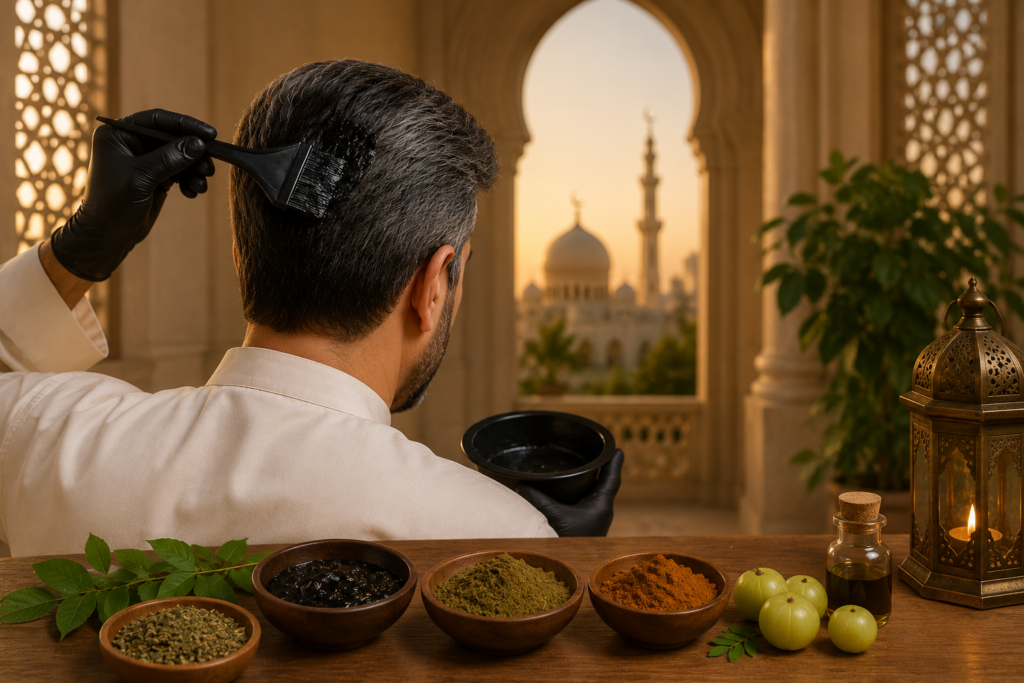
If you want to follow the example set in Islamic tradition, there’s a simple, time-tested method. And it doesn’t involve harsh chemicals.
Why Dyeing Gray Hair Is Encouraged
There’s a reported saying that Muslims should color their gray hair to look different from certain other groups. That’s why covering gray isn’t just allowed it’s seen as a positive, recommended act. Many older companions of the Prophet (peace be upon him) did exactly this.
Step-by-Step: Using Henna and Katam
Here’s the classic, natural approach:
- Choose pure henna or a henna-katam blend for a warm, natural color.
- Avoid pure-black mixes keep the tone reddish or brown.
- Apply the paste and let it sit so the color stains your hair.
- Reapply as the color fades, usually every few weeks.
This method is cheap, plant-based, and follows a tradition that’s centuries old. Plenty of people still use it today.
Expert Insight How Scholars Approach Hair Dye Rulings
It’s worth being clear about something: these rulings don’t come from one person’s opinion. They rest on trusted sources, studied carefully over centuries.
Scholars build their answers on three things:
- The Quran the central holy book of Islam
- Authentic hadith verified reports of the Prophet’s words and actions
- Qualified scholars experts trained to interpret these sources correctly
For example, the noted scholar Shaykh Ibn ‘Uthaymin addressed hair coloring directly, confirming that women may dye their hair colors other than black, as long as they avoid copying inappropriate looks. The hadith most often quoted here come from major, respected collections like Sahih Muslim and Sahih al-Bukhari.
It’s also honest to admit that the four main schools of thought in Islam Hanafi, Shafi’i, Maliki, and Hanbali sometimes differ on small details, especially around black dye. Some are stricter than others.
Sources scholars rely on:
- The Quran
- Sahih Muslim and Sahih al-Bukhari
- Recognized rulings from trained scholars
That’s why this article doesn’t claim to be a final verdict for your exact situation. For personal questions, the safest step is to consult a trusted local scholar who can guide you directly.
Conclusion
In most cases, dyeing your hair is allowed in Islam and is considered a personal grooming practice. Muslims should choose safe products and be mindful of Islamic guidelines regarding appearance and honesty. If there is uncertainty about a specific hair dye or circumstance, consulting a knowledgeable Islamic scholar can provide further guidance.
FAQs
Is it haram to dye your hair black?
Most scholars consider pure black dye forbidden or strongly discouraged, based on a clear hadith warning against it. Dark tones that aren’t true black, like a henna-katam blend, are generally viewed as fine.
Can Muslim women dye their hair any color?
Yes, women may dye their hair any color except pure black. The only condition is avoiding looks that copy others inappropriately or cross into immodesty.
Is henna haram or halal in Islam?
Henna is completely halal and was the preferred way to color hair in Islamic tradition, especially for gray. It stains the hair naturally rather than coating it, so it doesn’t affect wudu.
Does hair dye break your wudu?
No, regular hair dye does not break your wudu. The only concern is a thick, waterproof coating that blocks water from reaching your hair most everyday dyes soak in and cause no issue.
Is it haram for men to dye their beards?
Men may dye gray beards using natural colors like red, brown, or henna, and covering gray is even encouraged. The one rule to follow is the same as for everyone: avoid pure black.