
What is Muharram in Islam? Muharram is the first month of the Islamic lunar calendar and is considered one of the four sacred months in Islam. It holds great religious significance for Muslims around the world. The month is known for its spiritual importance, increased acts of worship, and remembrance of historical events, particularly the martyrdom of Husayn ibn Ali at the Battle of Karbala on the 10th day of Muharram, known as Ashura.
What Does the Word “Muharram” Actually Mean?
The name itself tells you everything.
Muharram comes from the Arabic root meaning “forbidden” or “sacred.” It’s not named after a person, a place, or a historical event. It was divinely designated set apart by God before human history even began, according to Islamic belief.
That’s different from most month names you’ll encounter. Think of it like a label that signals: this time is different, treat it accordingly.
The name is a quiet but powerful reminder that Muharram isn’t just Month 1 on a calendar. It’s a month that carries spiritual weight from the moment it begins.
Where Does Muharram Fit in the Islamic Calendar?
The Hijri Calendar Explained Simply
The Islamic calendar also called the Hijri calendar is a lunar calendar. That means it follows the moon’s cycles, not the sun’s. It has 12 months and roughly 354 days per year, which is about 11 days shorter than the Gregorian calendar most of the world uses.
Because of that difference, Muharram shifts approximately 11 days earlier each year relative to the Western calendar. So unlike January, it doesn’t stay in winter or summer it moves through all seasons over time.
The calendar is counted from the year the Prophet Muhammad migrated from Mecca to Medina an event called the Hijra. That’s why it’s called the Hijri calendar. The year 2025 in the Gregorian calendar corresponds to the year 1447 in the Hijri calendar.
Here’s a simple overview of the Islamic calendar:
| 1 | Muharram | Sacred month Islamic New Year |
| 2 | Safar | |
| 3 | Rabi al-Awwal | Birth of the Prophet (PBUH) |
| 4 | Rabi al-Thani | |
| 5 | Jumada al-Awwal | |
| 6 | Jumada al-Thani | |
| 7 | Rajab | Sacred month |
| 8 | Shaban | Month before Ramadan |
| 9 | Ramadan | Month of fasting |
| 10 | Shawwal | Eid al-Fitr |
| 11 | Dhul Qi’dah | Sacred month |
| 12 | Dhul Hijjah | Sacred month Hajj and Eid al-Adha |
What Are the Four Sacred Months in Islam?
The Quran explicitly states that four of the twelve months are sacred. The Prophet Muhammad named them specifically: Muharram, Rajab, Dhul Qi’dah, and Dhul Hijjah.
Three of the four Dhul Qi’dah, Dhul Hijjah, and Muharram — appear consecutively. Rajab stands alone in the middle of the year.
During these months, good deeds carry greater reward and wrongdoing carries greater weight. Islamic scholars have consistently described the sacred months as opportunities to reset, increase worship, and guard your character more carefully than usual.
Muharram, though, has a distinction the others don’t. It’s the only month the Prophet called “the month of Allah” a title we’ll explore further shortly.
Why Is Muharram Important in Islam?
There are three layers to Muharram’s importance, and all three work together.
First, its position. As the first month of the Islamic year, Muharram is a natural beginning point a built-in invitation to reflect on the past year and set intentions for the one ahead.
Second, its divine designation. Being one of the four sacred months means Muharram isn’t just culturally significant —it has theological weight. The Quran directly references these months, making awareness of them a matter of faith rather than just tradition.
Third, the hadith. When someone asked the Prophet Muhammad which fasting was best after Ramadan, he didn’t say “any month” or give a general answer. He specifically named Muharram. That kind of direct prophetic endorsement places Muharram in rare company in the Islamic calendar.
For millions of American Muslims, Muharram also marks the start of a new Hijri year a moment for sincere reflection that doesn’t always get the same cultural attention as January 1st, but carries far deeper spiritual meaning for those who observe it.
What Is Ashura and How Does It Connect to Muharram?
What Does “Ashura” Mean?
The word Ashura simply means “tenth.” It specifically refers to the 10th day of Muharram the most significant day of the month.
Think of it this way: Muharram is the month, and Ashura is the day within that month that carries the most historical and spiritual weight. Confusing the two is one of the most common misunderstandings people have when they first learn about this topic.
What Happened on the Day of Ashura?
The 10th of Muharram is tied to some of the most significant moments in prophetic history. When the Prophet Muhammad arrived in Medina, he found the Jewish community fasting on that day. When he asked why, they explained that it was the day God saved Moses and the Israelites from Pharaoh parting the sea so they could escape.
The Prophet’s response was immediate: “We have more right to Moses than you.” He fasted that day and encouraged his companions to do the same.
Islamic tradition also connects Ashura to a series of other momentous events:
- Prophet Nuh’s (Noah’s) ark came to rest after the great flood.
- Prophet Yunus (Jonah) was freed from the belly of the whale.
- Prophet Ayyub (Job) was cured of his long illness.
- Prophet Adam’s repentance was accepted by God.
Each of these is a story of hardship followed by divine mercy which is part of why Ashura carries such emotional resonance. It’s a day that has always been associated with relief after difficulty, and gratitude in response to grace.
The Battle of Karbala and Why It Changed Everything for Shia Muslims
In 680 CE on the 10th of Muharram something happened that would define how one major branch of Islam observes this day to this day.
Husayn ibn Ali, the grandson of the Prophet Muhammad, refused to pledge loyalty to Yazid I, a ruler whose legitimacy he questioned on moral and religious grounds. He traveled toward Kufa in modern-day Iraq with a small group of family and companions, vastly outnumbered. On the plains of Karbala, he and most of the men with him were killed.
For Shia Muslims, this was not just a historical tragedy. It became the defining symbol of standing for justice against oppression even at the cost of your life. The martyrdom of Husayn ibn Ali is at the heart of why Shia Muslims approach Muharram so differently from their Sunni brothers and sisters.
How Do Muslims Observe Muharram? Sunni and Shia Practices
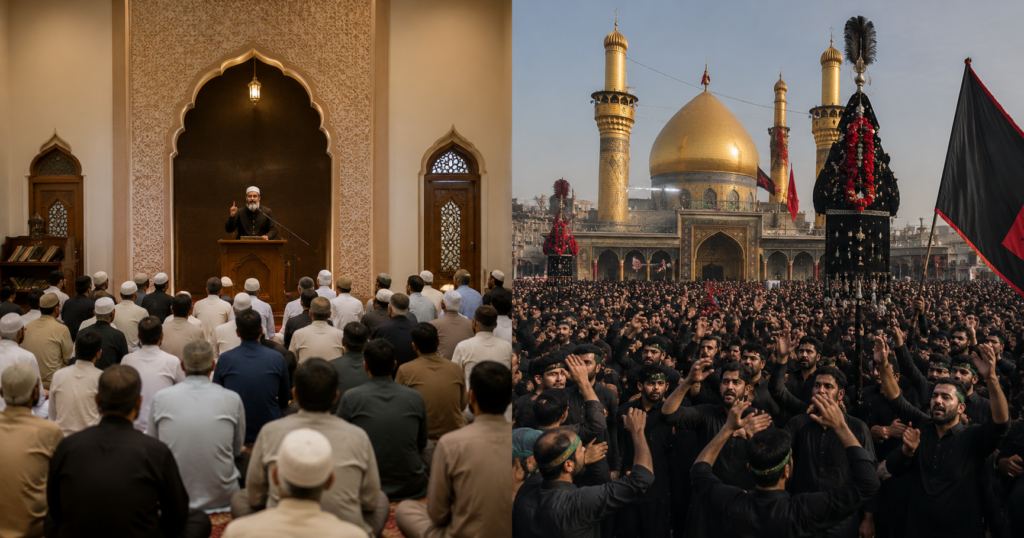
This is the section most resources skip and it matters enormously if you want to actually understand what Muharram looks like in real life.
How Sunni Muslims Observe Muharram
For Sunni Muslims, fasting is the primary act of worship during Muharram particularly on the 9th and 10th of the month.
The Prophet recommended fasting two days rather than one, specifically to distinguish the Muslim observance from the Jewish fast. Fasting on the 10th alone is also permissible; some add the 11th as an alternative pairing.
Beyond fasting, Sunni Muslims may also:
- Increase their recitation of the Quran.
- Engage in remembrance of God (dhikr)
- Give charity (Sadaqah) Muharram is seen as an excellent time to begin year-round giving habits.
- Spend more time in night prayer.
The overall tone is one of quiet, intentional spiritual focus not public mourning, not festive celebration.
How Shia Muslims Observe Muharram
For Shia Muslims, Muharram and specifically the first ten days leading to Ashura — is a period of mourning and commemoration centered on the death of Husayn ibn Ali at Karbala.
Practices include:
- Majalis lamentation gatherings where the story of Karbala is recited and mourned
- Public processions, especially on the 10th of Muharram
- Wearing black as a sign of grief
- Refraining from celebrations, weddings, or festive events during the first ten days
- Some communities engage in symbolic acts of sorrow, though these vary widely across regions and traditions.
For Shia Muslims, observing Muharram is an act of solidarity with Husayn’s stand against injustice a reaffirmation, year after year, that his sacrifice was not forgotten.
Sunni vs. Shia Muharram Observance at a Glance
| Primary act | Fasting (9th and 10th) | Mourning and commemoration |
| Tone | Reflective, spiritual | Sorrowful, communal |
| Key event | Moses saved from Pharaoh | Martyrdom of Husayn ibn Ali |
| Public expression | Generally private | Public processions common |
| Ashura significance | Day of divine mercy and salvation | Day of martyrdom and grief |
Both traditions honor Muharram as sacred. The expressions are simply different rooted in different parts of Islamic history and theology.
What Does “The Month of Allah” Actually Mean?
No other month in the Islamic calendar carries this exact title. The Prophet Muhammad specifically referred to Muharram as “the month of Allah” and Islamic scholars across centuries have treated that distinction as meaningful, not decorative.
The title points to a special divine connection as if this month belongs to God in a way that even Ramadan, for all its prominence, isn’t described the same way.
Practically, scholars interpret this to mean:
- Acts of worship performed in Muharram carry extraordinary weight.
- The month is an invitation not an obligation, but an open door to spiritual growth.
- Fasting in Muharram is the best voluntary fast of the year, as the Prophet said directly.
Ibn Rajab al-Hanbali, one of the most respected classical Islamic scholars, wrote at length about the sacred months and specifically noted the elevated status of Muharram. His core point: the Islamic year opens with a sacred month for a reason it’s setting the spiritual tone for everything that follows.
If you start your year with intention, worship, and gratitude, you’re more likely to carry that forward. That’s not just good theology. It’s practical wisdom.
Fasting in Muharram What You Actually Need to Know
Is Fasting in Muharram Obligatory?
No fasting in Muharram is voluntary, not obligatory. It falls into the category of recommended (nafl) acts of worship. Only Ramadan carries the obligation to fast.
Interestingly, fasting on Ashura was actually obligatory in the early days of Islam before the command to fast in Ramadan came. Once Ramadan became obligatory, Ashura became strongly recommended but optional.
What Is the Reward for Fasting on Ashura?
This is where it gets remarkable. The Prophet Muhammad said that fasting on the 10th of Muharram expiates wipes away the sins of the previous year. That’s a significant reward for a single voluntary day of fasting, and it’s recorded in Sahih Muslim, one of the most reliable hadith collections.
Which Days Should You Fast?
Here’s a simple guide:
- Day 9 (Tasu’a) + Day 10 (Ashura) the Prophet’s recommended combination
- Day 10 alone permissible and still carries the reward.
- Day 10 + Day 11 an acceptable alternative pairing if Day 9 was missed
The reason for fasting two days comes directly from the Prophet. When companions pointed out that the Jewish fast was also on the 10th, he advised adding another day to mark the Muslim observance as distinct. He intended to fast the 9th the following year — but passed away before that year arrived. His companions honored his intention.
A Scholar’s Perspective Why Muharram Deserves More Attention
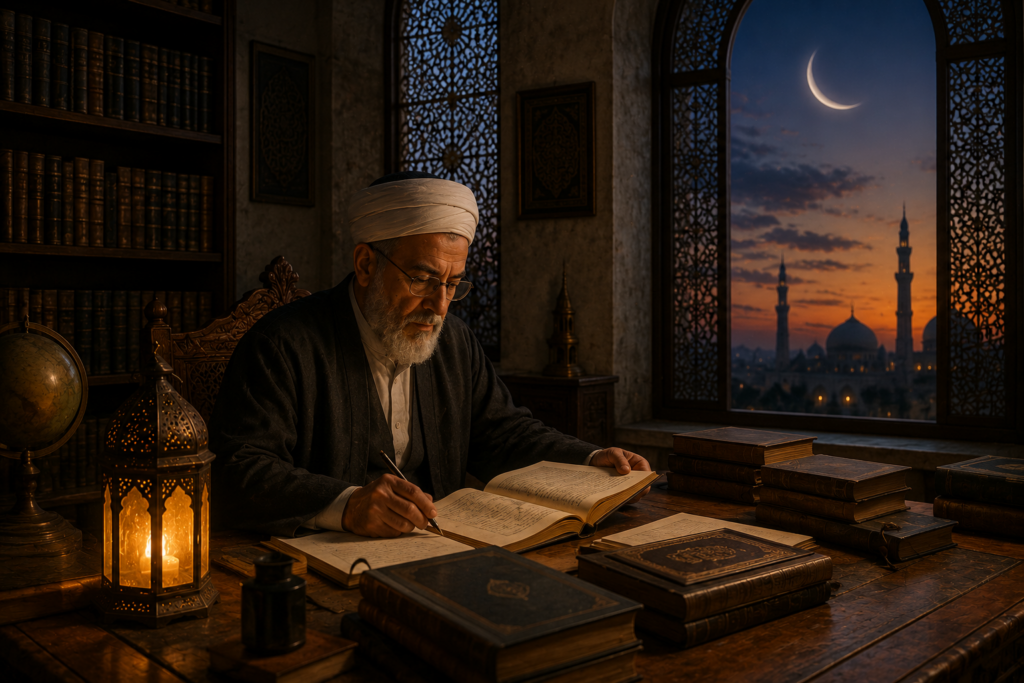
Here’s an honest observation: Muharram is one of the most overlooked months in the Islamic year, especially in Western Muslim communities.
Ramadan gets a full cultural apparatus countdown apps, special menus at restaurants, holiday greetings on social media. Eid gets two public celebrations. Muharram mostly gets a quiet mention in mosque newsletters, if that.
But the classical Islamic tradition treated Muharram with great seriousness. Scholars like Ibn Rajab al-Hanbali dedicated entire texts to the virtues of the sacred months, specifically singling out Muharram’s unique status. The idea that the Islamic year begins in a sacred month not any ordinary one was considered deeply intentional.
The Islamic New Year isn’t designed to be celebrated with fireworks. It’s designed to be entered with reflection.
That’s a fundamentally different philosophy from the one on January 1st. There’s no party, no countdown, no resolution list. Instead, there’s an invitation: start clean, fast if you can, give to others, and be honest with yourself about the year ahead.
For American Muslims in particular, embracing Muharram fully is a way to reclaim a part of the Islamic calendar that often gets lost in the noise of a non-Muslim cultural environment. It deserves more than an afterthought.
Is Muharram a Holiday? What U.S. Readers Need to Know
Muharram is not a federal public holiday in the United States. There’s no day off work, no school closure, no official national observance.
But for the estimated 3.45 million Muslims living in America, it’s a personally and spiritually significant time. Mosques hold special events, community gatherings take place, and many Muslims choose to fast on Ashura while going about their regular days.
In Dearborn, Michigan home to one of the largest Arab and Muslim communities in the country Shia Muharram observances are particularly visible. Processions, community gatherings, and commemoration events mark the 10th of Muharram in ways you’d see echoed in cities from Karachi to Beirut.
Internationally, several countries designate Ashura as a national public holiday, including Pakistan, Iran, Iraq, Lebanon, and Bahrain.
If you’re a non-Muslim in the U.S. and your Muslim colleague or neighbor seems quieter or more reflective this time of year now you know why.
Conclusion
Muharram is a month of reflection, devotion, and remembrance in Islam. It encourages Muslims to strengthen their faith through prayer, fasting, and good deeds while honoring important events in Islamic history. The lessons of sacrifice, patience, and righteousness associated with Muharram continue to inspire Muslims across generations.
FAQs
What is Muharram in Islam in simple terms?
Muharram is the first month of the Islamic calendar and one of four months God designated as sacred in the Quran. It contains Ashura, the 10th day of the month, which is the most significant day of Muharram for both Sunni and Shia Muslims.
Is Muharram the same as the Islamic New Year?
Muharram is the month in which the Islamic New Year begins but the New Year itself isn’t a celebration the way January 1st is. It’s treated as a spiritual reset, not a party.
What is the difference between Muharram and Ashura?
Muharram is the entire first month of the Islamic calendar. Ashura is one specific day within that month the 10th which carries its own distinct historical and spiritual significance.
Do all Muslims fast during Muharram?
Fasting in Muharram is strongly recommended but not obligatory. Sunni Muslims are especially encouraged to fast on the 9th and 10th of Muharram. Shia Muslims focus more on mourning than fasting during this period.
Why do Shia Muslims mourn during Muharram?
Shia Muslims commemorate the martyrdom of Husayn ibn Ali, the Prophet’s grandson, who was killed at the Battle of Karbala on the 10th of Muharram in 680 CE. His death is seen as a symbol of standing against injustice, and mourning him is an act of love and loyalty.