
To convert to Islam, a person sincerely recites the Shahada, the declaration of faith. The words are: “Ashhadu an la ilaha illa Allah, wa ashhadu anna Muhammadan rasul Allah,” which means, “I bear witness that there is no god but Allah, and I bear witness that Muhammad is the Messenger of Allah.” For those wondering What to Say to Convert to Islam, this declaration, said with genuine belief and understanding, is the essential step in embracing Islam.
The Shahada The Exact Words to Say

The declaration you make to become Muslim is called the Shahada, which means “testimony” or “witness.” It is the first of the Five Pillars of Islam and it’s the only thing standing between where you are now and where you want to be.
Here it is in full:
| Version | Text |
| Arabic Script | أشهد أن لا إله إلا الله وأشهد أن محمداً رسول الله |
| Transliteration | Ash-hadu an la ilaha ill Allah, wa ash-hadu anna Muhammadan rasul Allah |
| English Translation | I bear witness that there is no god worthy of worship except Allah, and I bear witness that Muhammad is the Messenger of Allah |
That’s it. Two sentences. The most important two sentences in Islam.
What Each Part Actually Means
The Shahada has two halves and both matter equally.
The first half “There is no god worthy of worship except Allah” is a declaration of pure monotheism. You’re saying that nothing and no one else deserves your worship. Not an idol, not a person, not a system. Only the One Creator.
The second half “Muhammad is the Messenger of Allah” confirms that you accept Prophet Muhammad (peace be upon him) as the final prophet sent by God to guide humanity. Accepting his teachings and example is part of the deal.
Together, they form the foundation of Islamic faith. Simple. Profound. Life-changing.
Do You Have to Say It in Arabic? (English Works Too)
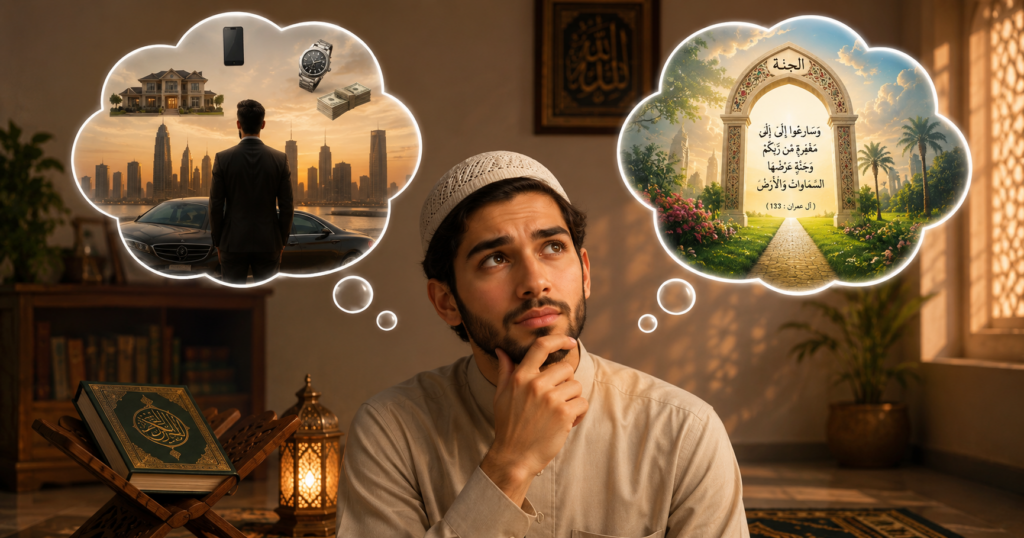
Here’s something no one tells you clearly enough: you can say the Shahada in English.
What matters to God is your sincerity not your language skills. If you don’t know Arabic yet, saying it in English is completely valid. You’ll learn the Arabic pronunciation over time, and that’s perfectly fine.
The Islamic scholarly position is consistent on this: conviction and understanding outweigh pronunciation. A nervous new Muslim stumbling through Arabic transliteration but believing every word is far more accepted than someone reciting it perfectly with an empty heart.
So breathe. Say it in the language you think and feel in. That’s where it counts.
- English Shahada: completely valid
- Arabic Shahada: ideal to learn eventually, not required immediately
- Any language: accepted when spoken with genuine belief
How to Convert to Islam Step by Step
Knowing what to say to convert to Islam is just the start. Here’s the full process simple, clear, and doable today.
Step 1: Make your intention (Niyyah) Before you say a single word, set your intention in your heart. You don’t need to say it out loud. Just acknowledge privately, sincerely that you are choosing Islam of your own free will, seeking truth and closeness to God.
Step 2: Understand what you’re about to declare Read through the meaning of the Shahada one more time. You should know what you’re saying not recite it like a password. The two beliefs at its core: one God, one final Messenger.
Step 3: Say the Shahada aloud Say it clearly. Say it slowly. Say it like you mean it because you do. You can be alone in your bedroom, or surrounded by a mosque full of people. Both are equally valid in Islam.
Step 4: Perform Ghusl (optional but recommended) Ghusl is a full-body ritual shower a symbolic fresh start. It’s not required for your conversion to count, but many new Muslims find it deeply meaningful. A physical reset to match the spiritual one.
Step 5: Connect with a community (optional but valuable) You don’t need a mosque to become Muslim. But finding one can transform your experience. The Islamic Society of North America (ISNA) and local Islamic centers across the US offer free new Muslim support, resources, and community. You’re not meant to do this journey alone.
Step 6: Begin learning the basics Start with the Five Pillars of Islam. Learn how to perform the five daily prayers (Salah). Download a beginner Quran app. Take it one day at a time nobody expects you to know everything on day one.
Do You Need a Mosque, Witnesses, or a Certificate?
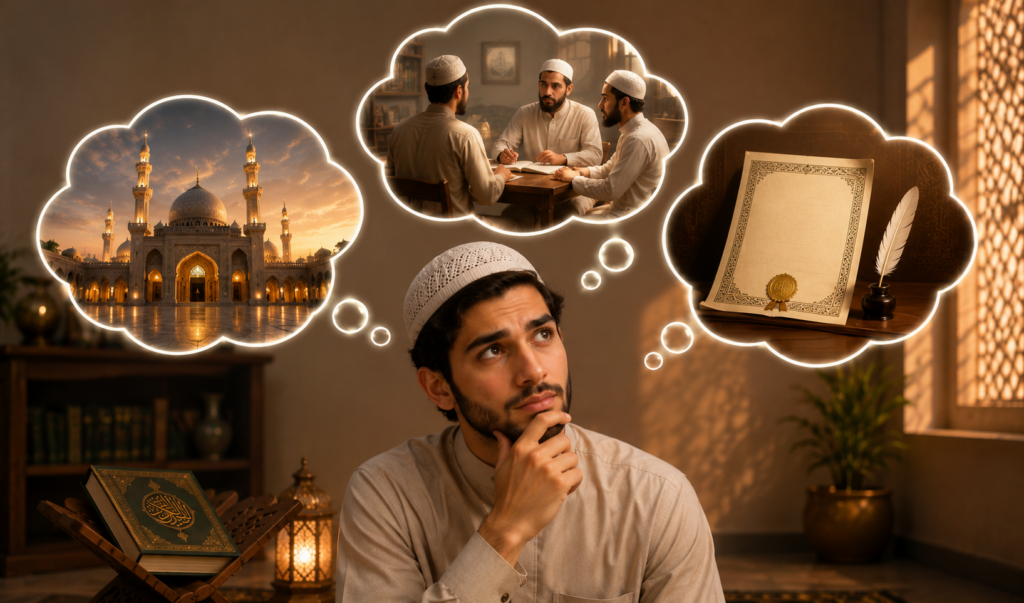
These three questions come up constantly and the answers might surprise you.
Can You Convert to Islam Alone at Home?
Yes. Absolutely yes.
Islam is a relationship between you and God. No institution, no authority figure, and no crowd is required to make it official. Scholars across all major Islamic schools of thought agree: the Shahada said alone, sincerely, is completely valid.
Millions of people around the world including many Americans have converted quietly in their own homes, without a single witness present. God heard every one of them.
Do You Need Muslim Witnesses?
Witnesses are encouraged but not required. Having a Muslim friend or imam present can be a beautiful and supportive experience. It also makes the moment feel real and celebratory. But if your situation doesn’t allow for that privacy concerns, family dynamics, geographic isolation converting alone is just as spiritually legitimate.
Is There a Certificate for Converting to Islam in the US?
There’s no official government-issued certificate, but many US mosques and Islamic centers will provide a Shahada certificate upon request. This document is useful for practical purposes applying for Hajj, getting married in an Islamic ceremony, or for immigration documentation in some countries.
If you need one, contact your nearest Islamic center. It’s typically free and takes minutes to arrange.
What Happens to Your Past Sins When You Convert?
This one hits differently for most people. And it should.
When you convert to Islam, every sin you’ve ever committed is wiped clean. Not reduced. Not put on a payment plan. Completely erased.
Prophet Muhammad (peace be upon him) said: “Islam erases whatever came before it.” (Sahih Muslim)
Think about what that actually means. Every mistake, every regret, every moment you’re not proud of gone. You begin your life as a Muslim with a record that reads zero. Clean slate. New start.
This isn’t a theological loophole. It’s a reflection of the Islamic understanding of God as infinitely merciful. According to Pew Research, roughly 20,000 Americans convert to Islam every year and one of the most commonly reported reasons is this exact experience of spiritual renewal and the chance to start over.
You don’t carry your past into Islam. You leave it at the door.
Why Muslims Say “Revert” Not “Convert”
You’ll hear this word quickly once you enter Muslim spaces. People say “revert” instead of “convert” and there’s a beautiful reason behind it.
Islam teaches that every human being is born in a state called Fitra a natural, original condition of submission to God. In other words, Islam believes you were born Muslim at heart. Life, family, society, and circumstance may have taken you elsewhere. But coming to Islam isn’t arriving somewhere new.
It’s coming home.
“Revert” means you’re returning to your original nature not adopting a foreign belief. Both terms are accepted in Muslim communities, and no one will correct you for saying “convert.” But understanding “revert” gives you a sense of the spiritual welcome embedded in the very language Islam uses for people like you.
What Changes After You Say the Shahada?
Some things shift immediately. Others develop gradually, at your own pace. Here’s an honest breakdown:
| Changes Immediately | You Learn Over Time |
| You are officially Muslim | How to perform the 5 daily prayers (Salah) |
| All past sins are erased | Arabic Quran recitation |
| You join the global Ummah (Muslim community) | Fasting during Ramadan |
| Your intention (Niyyah) resets spiritually | Zakat (charitable giving) and Hajj |
| God’s relationship with you begins fresh | Halal dietary practices |
The key thing to understand: Islam doesn’t require you to be complete before you begin. It asks you to begin, and then grow.
Do You Have to Change Your Name When You Convert to Islam?
No. You do not have to change your name.
This is one of the most common myths about converting to Islam and it causes unnecessary anxiety. Changing your name is a personal choice, not an Islamic requirement.
Many converts choose to take an Arabic or Islamic name as a meaningful symbol of their new identity. Others keep their birth names for the rest of their lives and are entirely accepted within Muslim communities.
If your name has a meaning that conflicts with Islamic values (for example, a name meaning “worshipper of a false deity”), scholars may recommend a change. But for the vast majority of Americans? Your name is yours to keep.
Converting to Islam Secretly What If Your Family Doesn’t Know?

This is the section most articles are too afraid to write. But it matters and you deserve an honest answer.
Your conversion is valid even if no one in your family knows about it. Islam is between you and God first. The timing of when or whether you tell your family is entirely your decision.
Many American converts, particularly those from Christian, Jewish, or non-religious backgrounds, have navigated this privately for months or even years before telling loved ones. There is no Islamic rule requiring you to announce your faith immediately.
Here’s what the data tells us: according to Pew Research, two-thirds of US converts to Islam were previously Christian, and family tension is one of the most commonly reported challenges in the conversion experience. You are not alone in this.
If you need support before you’re ready to go public, reach out to a local Islamic center confidentially or connect with online new Muslim communities. Many US mosques have dedicated support programs specifically for this situation.
How Many Americans Convert to Islam? (You’re Part of Something Big)
Islam is the fastest-growing religion in the United States by conversion numbers, according to Pew Research Center data.
Here’s what the numbers look like:
- ~20,000 Americans convert to Islam every year
- 67% of US converts previously identified as Christian
- Women now represent a rapidly growing share of American converts in many communities, the majority
- Islam has an estimated 3.45 million Muslim adults in the US, a figure that continues to rise
The American convert community is extraordinarily diverse. Former pastors. College students. Athletes. Suburban parents. People from every racial, ethnic, and socioeconomic background. Whatever your story, someone in the American Muslim community has lived a version of it.
Expert Insight What a New Muslim Imam Wants You to Know
One of the most consistent messages from Islamic scholars and imams who work with new Muslims in America is this:
“The greatest obstacle is not doubt it’s the fear of not being good enough yet.”
This fear is understandable. You look at Muslims who’ve been practicing for decades and think you need to arrive at their level before you qualify. You don’t. Islam is not a performance you must master before the curtain goes up.
Sheikh Hamza Yusuf, one of the most respected Islamic scholars in the United States, has said repeatedly that the journey of faith is built on sincerity, not perfection. The Prophet Muhammad (peace be upon him) built his earliest community from people who knew almost nothing about Islamic practice. They learned by living.
What new Muslim scholars and guides across the US consistently emphasize:
- Start with the Shahada. Everything else is built on top of it.
- Give yourself at least a year to find your footing don’t judge your entire faith journey by your first month.
- Connect with people, not just books. Community is where Islamic learning truly happens.
- Mistakes do not undo your Islam. Every Muslim sins. What matters is returning to God sincerely.
What to Do Right After Converting Your First 7 Days as a Muslim
The Shahada takes seconds. The journey takes a lifetime. Here’s how to spend your first week well:
- Perform Ghusl if you haven’t already it’s a beautiful ritual to mark your fresh start
- Learn Wudu the short purification routine performed before prayer
- Watch or read a basic guide to Salah even just learning one prayer is a meaningful start
- Find your nearest US Islamic center a quick Google search for “Islamic center near me” will do it
- Download a beginner Quran app apps like Quran.com offer English translation and audio
- Don’t try to learn everything at once pick one thing per week and build from there
- Reach out when you need support ISNA, local mosques, and online new Muslim forums exist specifically for you
Conclusion
Converting to Islam is a personal and spiritual decision centered on faith in one God and acceptance of Prophet Muhammad as His Messenger. Reciting the Shahada sincerely marks the beginning of a Muslim’s journey. After conversion, learning about Islamic beliefs, prayer, and daily practices can help strengthen faith and understanding.
FAQs
What do you say when you convert to Islam?
You say the Shahada: “Ash-hadu an la ilaha ill Allah, wa ash-hadu anna Muhammadan rasul Allah.” In English: “I bear witness that there is no god worthy of worship except Allah, and I bear witness that Muhammad is the Messenger of Allah.” Say it sincerely, with understanding, in any language.
How long does it take to convert to Islam?
The conversion itself is instant the moment you say the Shahada sincerely, you are Muslim. There is no waiting period, no probationary period, and no course required beforehand. The learning journey that follows takes a lifetime, but the conversion takes seconds.
Is it free to convert to Islam?
Completely free. There are no fees, no membership costs, and no donations required. No institution owns Islam, and no one can charge you to enter it. Any resource, mosque, or person asking for payment to convert you is acting outside Islamic principles.
Can a non-Arabic speaker become Muslim?
Yes, absolutely. God understands every language. Saying the Shahada in English, Spanish, Mandarin, or any other language is valid. Learning the Arabic is recommended for prayer purposes over time, but it is not a condition of your conversion being accepted.
Can you convert to Islam if you have a complicated past?
Yes and this is one of the most liberating aspects of the faith. Islam teaches that conversion erases all previous sins entirely. Tattoos, past relationships, drinking, dietary history none of it prevents you from becoming Muslim or makes you less welcome. You start fresh.
Do I have to stop being friends with non-Muslims after converting?
No. Islam does not require you to cut off non-Muslim friends or family. Maintaining kind, respectful relationships with people of all faiths is encouraged. What changes is your own practice and values not who you’re allowed to care about.
What is the difference between Sunni and Shia Islam for a new convert?
Sunni and Shia are the two main branches of Islam, differing primarily in matters of historical leadership and some religious practices. As a new Muslim, you don’t need to choose a “side” immediately. Focus on the core fundamentals the Shahada, the Five Pillars, and basic prayer. You’ll naturally learn more as you grow in the faith.