
If you’ve ever shared a meal with a Muslim friend or colleague, you’ve probably noticed one thing missing from the table: pork. No bacon, no ham, no sausage made from pig meat. It’s one of the most visible dietary rules in Islam and one of the most misunderstood.
Why Don’t Muslims Eat Pork? Muslims don’t eat pork because the Quran explicitly declares it haram (forbidden), calling it impure. This command appears in several verses, including Surah Al-Baqarah (2:173) and Surah Al-Ma’idah (5:3). The primary reason is obedience to God’s command but many Muslims also point to health and hygiene concerns historically linked to pigs as supporting reasons, not the root cause.
The Religious Reason: What the Quran Actually Says
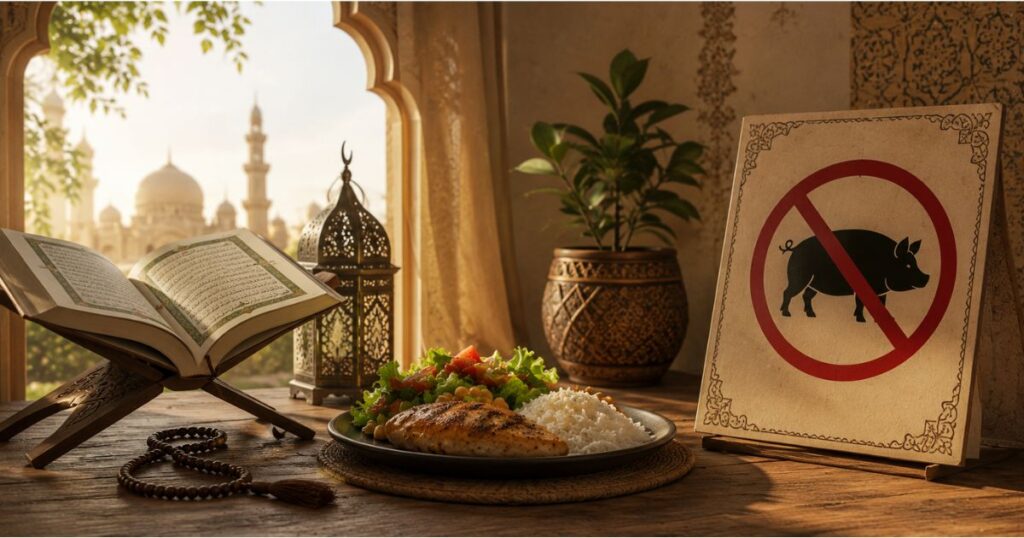
The prohibition isn’t vague or open to interpretation, it’s stated directly. The Quran names swine (pork) alongside carrion and blood as substances forbidden for consumption.
Key verses on pork:
- Surah Al-Baqarah (2:173) forbids carrion, blood, swine, and meat dedicated to anything other than God, while allowing exceptions for genuine necessity.
- Surah Al-Ma’idah (5:3) repeats the prohibition on carrion, blood, and swine as part of a broader list of forbidden foods.
- Surah Al-An’am (6:145) again names swine flesh as impure (rijs) alongside carrion and blood.
For Muslims, this isn’t a suggestion, it’s a direct command from God (Allah), and following it is considered an act of worship and submission, regardless of whether a person personally understands every reason behind it.
Is It Just Obedience, or Is There More?
At the core, yes, obedience is the primary driver. Islamic scholars are clear that a believer doesn’t need to fully understand why a command exists to follow it faithfully.
But there’s a deeper concept behind it: tahara, or ritual purity. In Islamic law, pork is classified as najas inherently impure. Consuming it is believed to compromise a Muslim’s state of spiritual cleanliness, which matters for prayer and other religious duties.
So the short version is: pork is avoided first because God forbade it, and second because it’s tied to a broader Islamic framework where physical purity and spiritual purity are connected.
Do Jews and Muslims Avoid Pork for the Same Reason?
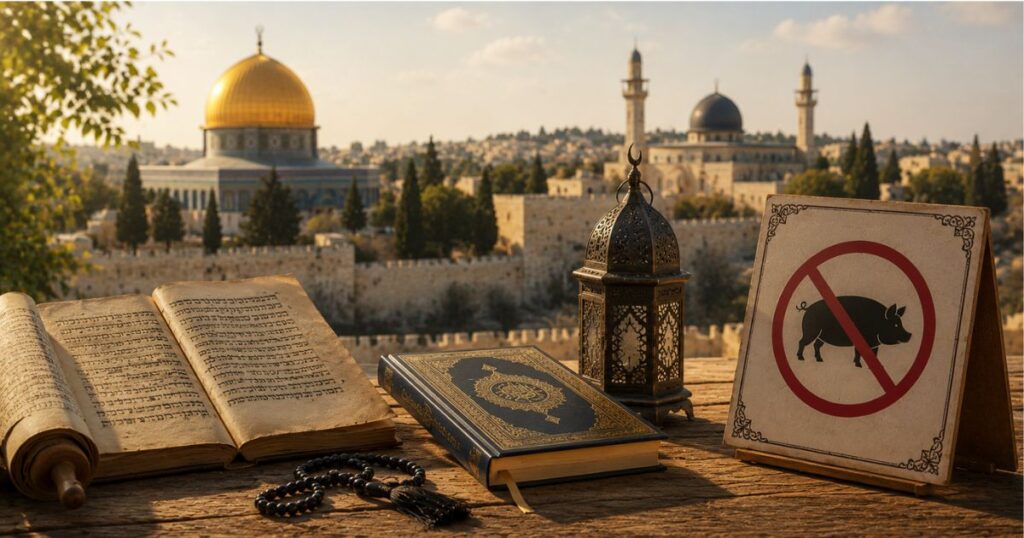
Not exactly but the traditions overlap more than most people realize. Judaism forbids pork too, based on Leviticus 11:7-8, which describes pigs as unclean because they don’t chew cud even though they have split hooves.
| Islam (Halal/Haram) | Judaism (Kosher) | |
| Core text | Quran (Surah 2:173, 5:3, 6:145) | Torah (Leviticus 11:7-8) |
| Reasoning given | Divine command; pork declared impure (najas) | Divine command; pig fails kosher criteria (doesn’t chew cud) |
| Underlying concept | Purity (tahara) | Ritual cleanliness |
| Accidental consumption | Forgiven with sincere repentance | Requires specific purification/atonement steps |
| Exceptions | Allowed under genuine necessity/starvation | Allowed under pikuach nefesh (saving a life) |
The two religions arrived at strikingly similar rules independently, which is part of why some scholars argue the prohibition reflects a much older Middle Eastern tradition around pigs, not something either faith invented in isolation.
The Health Angle Is Pork Actually Dangerous?
This is where a lot of confusion creeps in. The religious prohibition doesn’t depend on health science; it stands on its own as a matter of faith. But many Muslims and Islamic scholars do point to health-related concerns as supporting evidence, not the actual root of the rule.
The most commonly cited health issue is trichinosis, an infection caused by Trichinella parasites found in raw or undercooked pork. According to the CDC, the infection occurs when a person eats meat containing the parasite’s larvae, which then mature and reproduce in the small intestine before spreading through the body.
A few other points raised in health-focused discussions:
- Pigs are omnivorous scavengers, meaning they’ll eat almost anything, including waste, unlike ruminant animals such as cattle, which eat a controlled plant-based diet.
- Pigs have very few sweat glands, which historically fed the idea that they retain more toxins than other livestock (modern veterinary science treats this claim as folk reasoning rather than established fact).
- Modern commercial pork is far safer than pork was centuries ago, thanks to inspection standards, cooking guidelines, and controlled farming which is exactly why Islamic scholars are careful to frame health as a supporting point, not the primary reason for the prohibition.
The bottom line: the religious command stands independently of the health argument. Even if pork were proven to carry zero health risk, the Islamic prohibition would remain unchanged, because its foundation is obedience to a divine command, not a food-safety ruling.
What Happens If a Muslim Eats Pork by Accident?
This is one of the most common questions non-Muslims ask and the answer is straightforward: nothing punitive. Islam draws a clear line between intentional and accidental acts.
If someone unknowingly eats pork for example, if it’s hidden in a sauce or wasn’t disclosed at a restaurant it’s not considered a sin, since there was no intent to disobey. The person is simply encouraged to be more careful going forward and, if desired, to seek forgiveness through sincere remorse, which Islamic teaching treats as automatically accepted for unintentional acts.
Muslims are also permitted to eat pork under genuine necessity, such as starvation with no other food available; the Quran itself makes this exception explicit.
Beyond Pork Other Haram Foods in Islam
Pork gets the most attention, but it’s part of a broader dietary system. Other foods generally considered haram (forbidden) include:
- Carrion (animals that died naturally, not properly slaughtered)
- Blood consumed directly
- Alcohol and intoxicating substances
- Meat not slaughtered according to halal method (which includes a specific prayer and process)
- Carnivorous animals and birds of prey, in most interpretations
Everything outside these categories is generally halal (permissible) which is why halal certification exists: to verify that a product doesn’t contain hidden pork derivatives (like gelatin or certain enzymes) or violate other dietary rules.
How to Be Respectful If You’re Hosting a Muslim Guest
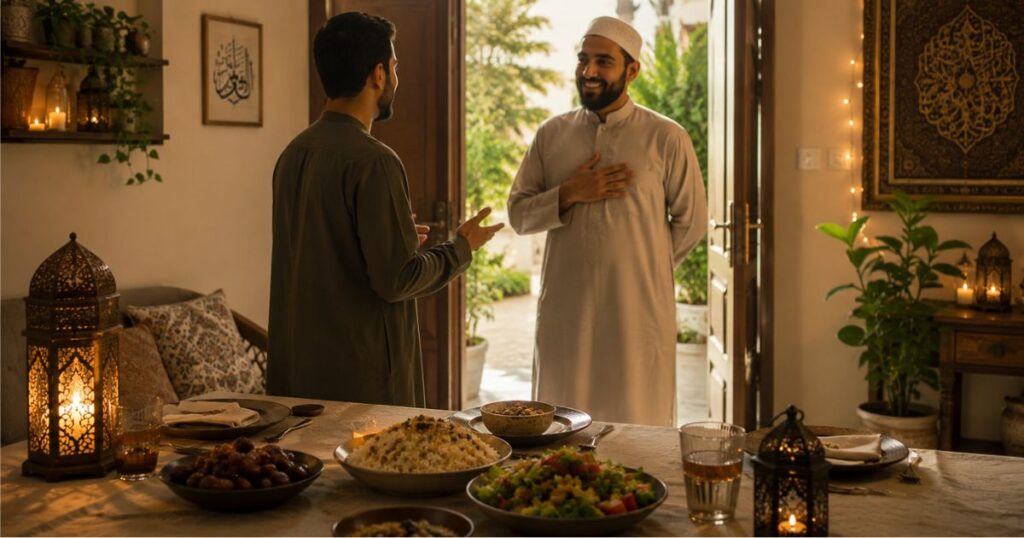
If you’re planning a meal with Muslim friends, family, or coworkers, a little awareness goes a long way:
- Ask directly, don’t assume. Dietary strictness varies; some Muslims avoid all pork-adjacent products (like gelatin), others are less strict.
- Watch for hidden pork. Broths, certain marshmallows, some cheeses (rennet), and refried beans (often made with lard) can contain pork-derived ingredients that aren’t obvious from the name.
- Offer halal or vegetarian options. When in doubt, a vegetarian dish avoids the issue entirely and is almost always a safe, appreciated choice.
- Don’t make it a big production. Most Muslims will simply and politely decline pork dishes, treating it as routine (rather than a big deal) is usually the most comfortable approach for everyone.
Conclusion
Muslims don’t eat pork primarily because the Quran explicitly forbids it, classifying pork as impure (najas) a command tied to the broader Islamic concept of purity (tahara). Health concerns like trichinosis are often cited as supporting evidence, not the actual reason. Accidental consumption isn’t sinful, and genuine necessity allows exceptions. The rule closely parallels Jewish kosher law, though each faith grounds it in its own scripture.
FAQs
Can Muslims eat pork if there’s nothing else to eat?
Yes. The Quran allows an exception under genuine necessity, such as starvation with no other food source available as long as it isn’t driven by desire or exceeding what’s needed to survive.
Do Jews and Muslims have the same reason for not eating pork?
Both trace the prohibition to scripture the Quran for Muslims, Leviticus for Jews but each religion frames its own reasoning independently, rooted in its own concept of purity and law.
What happens if a Muslim accidentally eats pork?
Nothing punitive. Since there was no intent to disobey, it isn’t considered sinful though many Muslims will still seek forgiveness and be more careful afterward.
Is pork actually unhealthy, or is it just religious?
The prohibition itself is purely religious, a command from God. Health concerns like trichinosis are commonly cited as supporting points, but they aren’t the foundation of the rule.
What other foods are haram besides pork?
Carrion, blood, alcohol, meat not slaughtered according to halal method, and carnivorous animals or birds of prey are also generally forbidden in Islam.
Can pork hide in foods that don’t look like pork?
Yes. Gelatin, certain enzymes, some cheeses made with animal rennet, and lard-based ingredients can contain pork derivatives which is why halal certification exists.