
A niqab is a piece of cloth worn by some Muslim women that covers the face, leaving only the eyes visible. It’s usually worn together with a headscarf and loose clothing as part of a broader practice of Islamic modesty. The niqab is different from a hijab, which covers the hair and neck but leaves the face uncovered, and from a burqa, which covers the entire face and body behind a mesh screen.
If you’ve seen the word “niqab” in the news, in a comparison with “hijab” or “burqa,” or in a debate about religious dress, this guide breaks down exactly what it means, where the practice comes from, and what its legal status actually is in the United States.
What Is a Niqab?
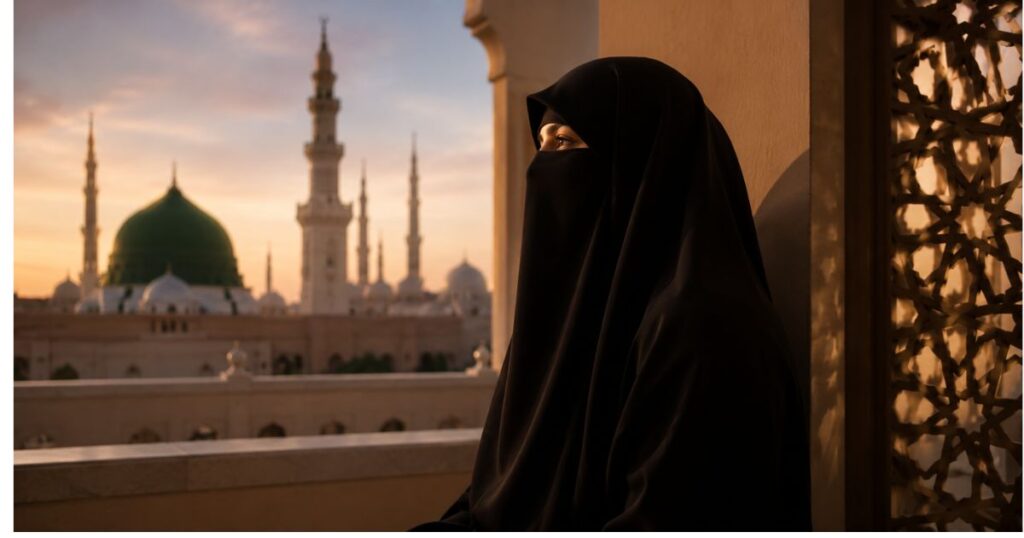
A niqab is a face veil. It typically covers the nose, mouth, and cheeks, while leaving a narrow opening or thin mesh panel over the eyes. It’s almost always worn over a headscarf (khimar) and paired with loose, non-form-fitting clothing like an abaya.
The word comes from the Arabic root n-q-b, which relates to “piercing” or “making an opening” a reference to the eye opening cut into the fabric. Niqabs are most commonly black, though variations in color and layering exist depending on region and personal preference.
Some niqabs use a single layer that leaves the eyes fully visible. Others add a second, sheer layer that can be lowered over the eyes for extra coverage while still allowing the wearer to see.
Where it’s most common: The niqab is most prevalent in parts of the Arabian Peninsula, including Saudi Arabia and Yemen, though it’s worn by a minority of Muslim women worldwide, including small numbers in the US and Europe.
Niqab vs. Hijab vs. Burqa: What’s the Difference?
These three terms get mixed up constantly, even though they describe distinctly different garments. Here’s how they actually compare:
| Garment | What It Covers | Face Visible? | Common Regions |
| Hijab | Hair, neck, sometimes shoulders | Yes, fully | Worldwide; most common form of Islamic head covering |
| Niqab | Face (nose, mouth, cheeks), worn with a headscarf | Only the eyes | Gulf states (Saudi Arabia, Yemen) |
| Burqa | Entire face and body, with a mesh screen over the eyes | No eyes covered by mesh | Afghanistan, parts of Pakistan |
The simplest way to remember it: hijab covers the hair, niqab covers the face but leaves the eyes open, and burqa covers everything including the eyes behind a mesh panel.
It’s worth noting that modest dress in Islam isn’t only a women’s topic there’s also a distinct Islamic dress code for men rooted in the same underlying principle of modesty for both genders.
In everyday English usage especially in the US and UK “hijab” is often used loosely to refer to any Islamic head covering, while “burqa” is sometimes used incorrectly to describe what is technically a niqab. The two garments are frequently confused with each other in casual conversation and media coverage, even though they cover different amounts of the face.
Is the Niqab Required in Islam?
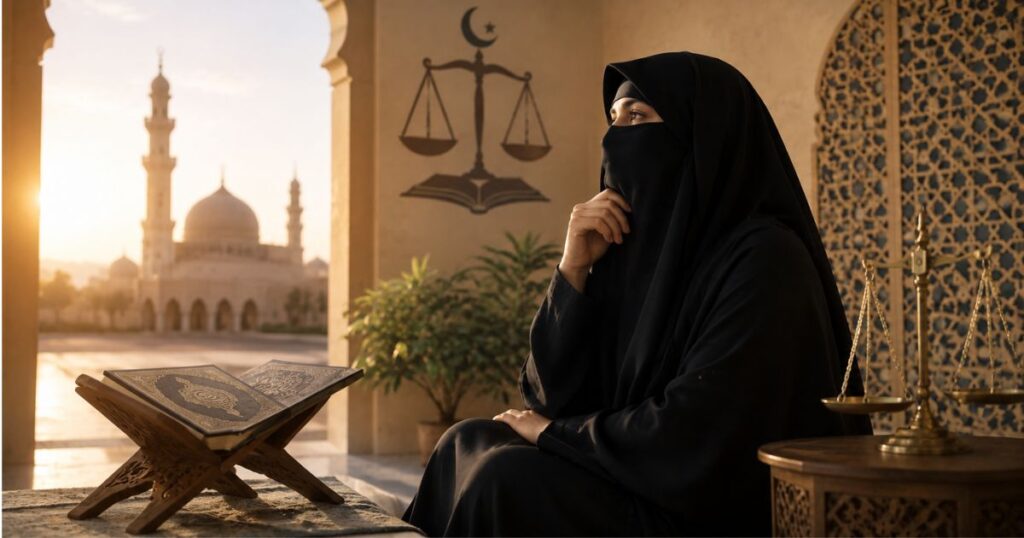
This is genuinely debated among Islamic scholars, and it’s worth representing that debate accurately rather than flattening it.
The broader concept of hijab modest dress for both men and women is grounded in the Quran, which instructs believers to lower their gaze and dress modestly (Surah An-Nur 24:31; Surah Al-Ahzab 33:59). Scholars broadly agree on this principle. Where they disagree is on whether “modesty” specifically requires covering the face.
- Most mainstream Islamic scholars hold that covering the hair and body satisfies the requirement of hijab, and that face-covering is not obligatory.
- A minority of scholars, primarily within Salafi and Wahhabi schools of thought, interpret hijab as requiring face covering in the presence of men outside the immediate family.
Because of this split, whether a woman wears a niqab often comes down to which scholarly interpretation she follows, along with regional custom and personal conviction not a single, universally agreed-upon rule.
Why Do Some Women Choose to Wear the Niqab?
Reasons vary by individual, and it’s worth hearing both sides of how this is talked about rather than picking one narrative.
Women who wear it by choice often describe the niqab as an extension of personal faith and modesty, a way to focus interactions on character rather than appearance, and a source of privacy in public spaces. For many, it’s framed as an act of devotion rather than a restriction the same underlying principle that shapes broader Islamic guidance on relationships and interactions between men and women.
Critics of the practice including some feminist scholars, secular commentators, and even some Muslim women argue that face-covering can function as a tool of social control, and that in some countries it isn’t fully a matter of individual choice, since local law or family pressure requires it.
Both perspectives show up regularly in public debate, and neither is universally “the” Muslim position Islam is practiced across a huge range of cultures and interpretations, and niqab-wearing represents one practice among many, not a religious requirement observed by all or even most Muslim women.
Where Is the Niqab Worn and Where Is It Banned?
The niqab is most commonly worn in Saudi Arabia and Yemen, and to a lesser extent in other Gulf countries. It’s far less common in South and Southeast Asia, where the hijab (headscarf without face covering) is the dominant form of Islamic dress.
Several countries have passed laws restricting or banning face coverings in public, most notably:
- France became the first country to ban face-covering veils in public in 2011, citing secularism and security.
- Belgium passed a similar nationwide ban shortly after France.
- Quebec, Canada passed Bill 62 in 2017, requiring an uncovered face for anyone giving or receiving a government service, including public transit.
These bans are typically framed by their governments around identification, security, or secularism, and they remain controversial; critics argue they specifically target Muslim women’s religious practice, while supporters frame them as neutral rules about public interaction.
Is It Legal to Wear a Niqab in the United States?
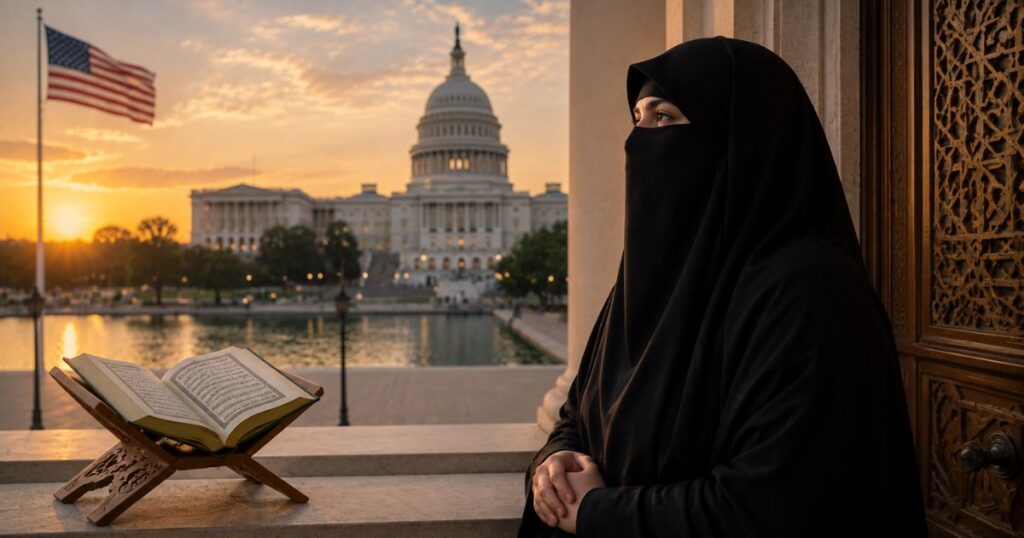
Yes. There is no federal or state law in the US that bans wearing a niqab, hijab, or any other religious face or head covering in public.
This is rooted in two legal protections:
- The First Amendment, which protects free exercise of religion and would make a law specifically targeting Islamic dress extremely difficult to uphold in court.
- The Religious Freedom Restoration Act (RFRA), a federal law that requires the government to show a compelling interest before substantially burdening someone’s religious practice, a high bar that a general niqab ban would struggle to clear.
That said, narrow, religion-neutral exceptions do exist in specific contexts; for example, some states have required a brief, private unveiling for identity verification purposes, such as renewing a driver’s license. A notable case, Freeman v. State of Florida, involved a Muslim woman who wore a niqab in her driver’s license photo for years before being required to remove it for a new photo after 2001; the case became a touchstone in the broader legal conversation about religious accommodation versus identification requirements.
Outside of these narrow, identity-verification contexts, Muslim women in the US are legally free to wear the niqab in public, at work (with reasonable accommodation), and in most civic settings.
Conclusion
Niqab is a form of modest Islamic dress that covers the face while leaving the eyes visible. Its meaning and practice can vary across cultures, communities, and interpretations of Islamic teachings. Unlike the hijab, which generally refers to covering the hair and body while leaving the face uncovered, the niqab provides additional face coverage. Understanding these differences with cultural and religious context can help promote respectful and accurate discussions about Muslim dress and modesty. If you’re new to exploring these topics, our New Muslim Guide is a good starting point for understanding the core beliefs and practices behind them.
FAQs
What is the difference between a niqab and a hijab?
A hijab is a headscarf that covers the hair and neck while leaving the face fully visible. A niqab covers the face itself, leaving only the eyes uncovered, and is typically worn over a hijab or headscarf.
What is the difference between a niqab and a burqa?
A niqab leaves the eyes visible through an opening. A burqa covers the entire face and body, including the eyes, behind a mesh screen that allows the wearer to see out.
Is the niqab required in Islam?
Most mainstream scholars say no modest dress is required, but face-covering specifically is not. A minority of scholars, mainly in Salafi and Wahhabi traditions, hold that it is required.
Is it legal to wear a niqab in the United States?
Yes. There’s no federal or state ban on the niqab in the US. It’s protected under the First Amendment and the Religious Freedom Restoration Act, with only narrow exceptions for identity verification in specific situations.
Why do some countries ban the niqab?
Countries like France, Belgium, and the Canadian province of Quebec have banned face coverings in public, citing security, identification, or secularism. These bans remain politically and legally controversial.
What does niqab mean in Arabic?
Niqab comes from the Arabic root n-q-b, meaning “to pierce” or “to make an opening” referring to the eye opening in the veil.