
Muslims perform Salah (prayer) five times a day, following a structured sequence of actions and recitations. During these prayers, they say specific phrases and supplications to connect deeply with Allah, express gratitude, seek guidance, and ask for forgiveness. This guide explains the key phrases Muslims recite in each part of the prayer, along with their meanings, so you can understand the spiritual significance behind every word.
Getting Ready for Your Daily Prayer
Before you can start talking to God, you need to get ready. Think of it like preparing for an important meeting with someone you love and respect deeply. You would not show up in dirty clothes or with a messy face, right?
How to Wash Up Correctly
Before every prayer, you do a special washing routine. This washing is not just about cleaning real dirt; it is about washing away your worries and starting fresh.
Here are the 4 main steps to wash up:
- Wash your face completely.
- Wash your hands and arms all the way up to your elbows.
- Wipe your head with wet hands.
- Wash your feet up to your ankles.
Once you finish this simple washing, you feel clean, awake, and ready to focus.
What Should You Wear?
When you pray, you want to dress modestly and respectfully. For men, this means wearing clothes that cover the body from the belly button down to the knees, though covering the shoulders is also best. For women, it means wearing loose clothing that covers the whole body and hair, leaving only the face and hands showing. Wearing clean, nice clothes helps you feel good and shows respect.
Facing the Right Direction
Did you know that Muslims all over the world face the exact same direction when they pray? It is true! Everyone turns toward a sacred building in the city of Mecca. Facing one single direction unites everyone together like one giant, global family. Today, you can easily find this direction using a simple compass app on your phone.
The Steps of the Prayer
You might be surprised to learn that Muslims pray 5 times a day. These prayers are spread out to keep you connected to God from morning until night.
Here are the 5 daily prayer times:
- Dawn: Right before the sun comes up.
- Noon: Right after the sun passes its highest point in the sky.
- Afternoon: In the late afternoon.
- Sunset: Right after the sun goes down.
- Night: When the sky gets completely dark.
The Beautiful Movements
The physical steps of a Muslim prayer are beautiful and easy to follow. You move your entire body, which helps your mind stay focused.
Here is how a single unit of prayer flows:
- Standing: You stand up straight, looking down at the ground to stay humble. You fold your hands over your chest.
- Bowing: You bend forward with your hands on your knees, keeping your back flat.
- Prostrating: You kneel down and place your forehead, nose, both hands, knees, and toes on the floor. This is the most emotional and powerful part of the prayer. Putting your face on the ground shows ultimate trust and love for God.
- Sitting: You sit back on your legs for a moment of quiet reflection.
What Words Are Said?
While doing these movements, you recite special words. When standing, you recite the opening chapter of the holy book, which asks for guidance and mercy. When bowing, you quietly say, “Glory be to my Lord, the Great.” When your forehead is on the ground, you whisper, “Glory be to my Lord, the Highest.” Every word is a beautiful mix of praise, gratitude, and asking for help.
Praying Together
While you can pray alone in your room, praying together with others is deeply rewarding. When people pray together, they stand shoulder to shoulder in straight lines. There is no VIP section. Rich, poor, young, and old all stand together as equals. It is a breathtaking reminder that everyone is equal in the eyes of God.
The Heart and Soul of Prayer
Why do people love praying so much? It is because it feeds the heart.
Finding Strength and Spirit
The spiritual benefits of Muslim prayer are huge. Life can be scary, stressful, and confusing. Prayer acts like a shield against sadness. When you bow down and give your worries to God, you feel a massive weight lift off your shoulders. It builds your inner strength and reminds you that you are never truly alone.
Common Mistakes to Avoid
When you are learning, you will definitely make a few mistakes, and that is totally okay! Here are 3 common slip-ups to watch out for:
- Rushing: Try not to speed through the movements. Take your time and feel each step.
- Looking around: Keep your eyes focused on the spot where your forehead will touch the ground. Looking at the ceiling or out the window breaks your focus.
- Worrying about mistakes: If you forget a word, do not panic. God knows you are trying your best.
Staying Focused and Mindful
It is super normal for your mind to wander. You might suddenly remember you forgot to do your homework or feed the dog. To stay focused, try to think deeply about the meaning of the words you are saying. Take slow, deep breaths. Imagine you are having a private, one-on-one conversation with the Creator of the universe.
Special Situations and Adjustments
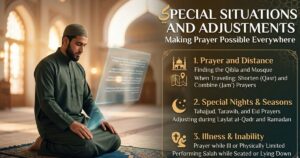
Life is unpredictable, but the prayer is flexible enough to fit any situation.
Praying When Sick or Traveling
God never wants prayer to be a painful burden. If you are traveling on a long trip, you are actually allowed to shorten your prayers to make things easier! If you are sick and cannot stand up, you can pray sitting in a chair. If you are too sick to sit, you can even pray lying down in bed.
Why Use the Original Language?
You might wonder why these prayers are always said in the original Arabic language. Using one shared language means that a person from America, a person from Japan, and a person from Brazil can all pray together anywhere in the world and understand exactly what is going on. However, outside of the formal prayer movements, you can talk to God and ask for things in any language you want! English, Spanish, French—God hears and understands them all.
Teaching the Next Generation
When teaching Muslim prayer to kids, it is all about love and patience. You do not force them; you invite them. You let them watch you pray, and soon enough, they want to join in. Celebrating their efforts with hugs and kind words makes them love the peaceful feeling of praying.
What Happens After the Prayer?
The connection does not stop when the formal movements end.
Quiet Moments of Reflection
After you finish the formal steps, you can sit quietly and simply talk to God from your heart. This is the perfect time to ask for exactly what you want. You can ask for a good grade on a test, health for your parents, or peace for the world. You also take a minute to count your blessings, saying “Thank God” over and over.
Fitting Prayer Into a Busy Life
You might think praying 5 times a day is impossible with school, work, and sports. But each prayer only takes about 5 to 10 minutes! It is a tiny break that actually makes your day go smoother. You just plan your day around your prayer times, rather than trying to squeeze prayers into your busy day.
A Journey Through History
This exact way of praying has been passed down for thousands of years. It connects people living today with generations of people from the past. Knowing that you are participating in a beautiful, ancient tradition brings a deep sense of belonging.
Wrapping It Up: A Path to Peace
Every single Muslim prayer is a chance to hit reset. It is a beautiful daily reminder to be kind, stay humble, and trust that everything will be okay. It cleanses the heart, calms the busy mind, and brings absolute inner peace.
If you are trying to learn how to pray, take it one day at a time. It is a lifelong journey of love, learning, and connection.
Next Steps for You:
- Try downloading a free app that shows the 5 daily prayer times.
- Practice the simple washing routine the next time you feel stressed.
- Take 5 quiet minutes today just to sit, breathe, and thank God for everything you have.
Conclusion
Muslim prayers are more than just ritual actions they are a profound way to connect with Allah, seek guidance, and find inner peace. By understanding what Muslims say during each part of Salah, we can appreciate the spiritual depth, meaning, and discipline involved. Reciting these phrases with sincerity strengthens faith and cultivates mindfulness in daily life.
FAQs
What are the main phrases Muslims say during prayer?
During Salah, Muslims recite phrases like Takbir (“Allahu Akbar”), Al-Fatiha (opening chapter of the Quran), and Tashahhud (testimony of faith). Each phrase has a spiritual significance, from praising Allah to seeking guidance and forgiveness.
Do Muslims pray in any language other than Arabic?
The obligatory parts of Salah, including Quranic verses and specific supplications, are always recited in Arabic. Personal prayers (du’a) can be made in any language, allowing Muslims to express their thoughts and needs directly to Allah.
Why is understanding the phrases important for non-Muslims?
Knowing the phrases Muslims say helps non-Muslims understand the spiritual meaning, respect the practice, and foster interfaith awareness. It provides insight into the discipline, devotion, and purpose behind daily prayers.