
Fajr prayer words include the Niyyah (intention), Takbeer (“Allahu Akbar”), Surah Al-Fatiha, an additional Surah, Ruku and Sujood recitations, Tashahhud, and Tasleem. Fajr consists of 2 Sunnah rakats followed by 2 Fard rakats, and it’s the only obligatory prayer besides Maghrib and Isha where the first two rakats are recited aloud.
What Is Fajr Prayer?
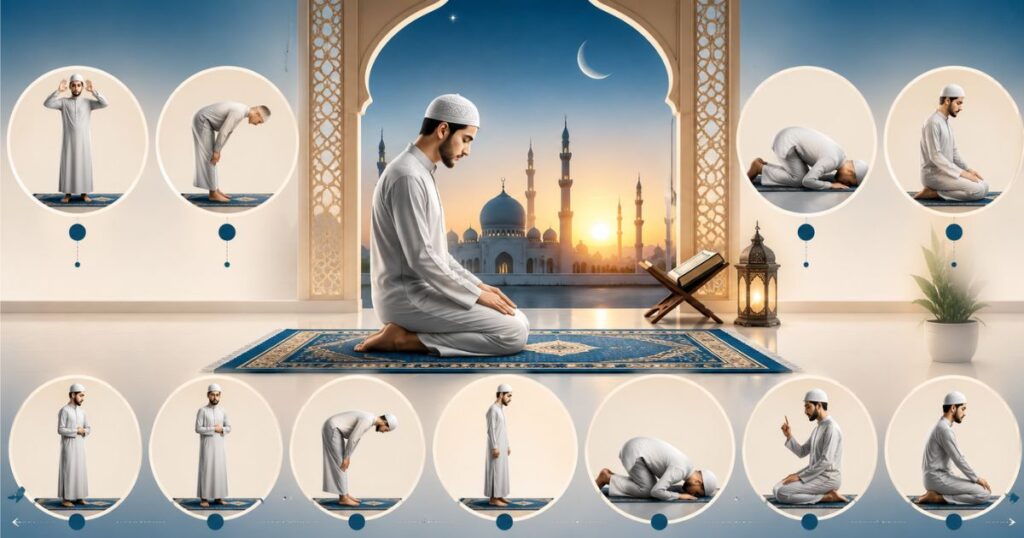
Fajr is the first of the five daily obligatory prayers in Islam, performed between true dawn and sunrise. It consists of two Sunnah (recommended) rakats and two Fard (obligatory) rakats, making it one of the shortest prayers of the day but also one of the most emphasized.
Before You Begin: Preparation Words
Before reciting anything, you’ll complete Wudu (ablution) and face the Qibla (direction of the Kaaba). Then comes the Niyyah, your intention to pray.
The Niyyah doesn’t need to be spoken aloud. It’s a silent, mental intention you simply know in your heart which prayer you’re about to perform.
Niyyah for Sunnah Fajr
You silently intend: “I intend to perform the two rakats Sunnah of Fajr prayer, facing the Qibla, for the sake of Allah.”
Niyyah for Fard Fajr
You silently intend: “I intend to perform the two rakats Fard of Fajr prayer, facing the Qibla, for the sake of Allah.”
Once your intention is set, raise your hands to ear level, palms facing the Qibla, and begin, , and begin with the Takbeer.
Fajr Prayer Words Full Table
Here’s every recitation of Fajr in one place, organized by position in the prayer.
| Position | Arabic (Transliteration) | English Meaning | Aloud or Silent |
| Takbeeratul Ihram | Allahu Akbar | Allah is the Greatest | Aloud |
| Opening dua (optional, Hanafi/Hanbali) | Subhanaka Allahumma wa bihamdika, wa tabarakasmuka, wa ta’ala jadduka, wa la ilaha ghairuk | Glory to You, O Allah, and praise. Blessed is Your name and exalted is Your majesty. There is no god but You | Silent |
| Ta’awwudh | A’udhu billahi min ash-shaytaan-ir-rajeem | I seek refuge in Allah from the accursed devil | Silent |
| Tasmiah | Bismillah hir Rahman nir Raheem | In the name of Allah, the Most Gracious, the Most Merciful | Aloud (in Fajr) |
| Surah Al-Fatiha | Full 7 verses | The Opening chapter of the Quran | Aloud (in Fajr) |
| Additional Surah | Any short Surah (e.g., Al-Ikhlas) | Varies | Aloud (in Fajr) |
| Ruku (bowing) | Subhana Rabbiyal Adheem (x3) | Glory to my Lord, the Most Great | Silent |
| Rising from Ruku | Sami’ Allahu liman hamidah, Rabbana lakal hamd | Allah hears whoever praises Him; our Lord, praise be to You | Silent |
| Sujood (prostration) | Subhana Rabbiyal A’la (x3) | Glory to my Lord, the Most High | Silent |
| Tashahhud (sitting) | At-tahiyyatu lillahi… (full Tashahhud) | All greetings are for Allah… | Silent |
| Salawat (final sitting) | Allahumma salli ala Muhammad… | O Allah, send blessings on Muhammad… | Silent |
| Tasleem | As-salamu alaikum wa rahmatullah (turn right, then left) | Peace and mercy of Allah be upon you | Aloud |
Note on the Aloud/Silent column: This follows the mainstream ruling that in Fajr, the Imam or a person praying alone recites Al-Fatiha and the additional Surah audibly in both rakats. Ruku, Sujood, and Tashahhud recitations remain silent regardless of which prayer you’re in.
Step-by-Step: Words for Each Rakat
- Stand and say Takbeer. Raise your hands, say “Allahu Akbar,” then fold your hands (right over left, below the navel or chest, depending on your madhab).
- Recite the opening dua (if you follow this Sunnah), then Ta’awwudh and Tasmiah silently.
- Recite Surah Al-Fatiha aloud, followed by a short additional Surah.
- Go into Ruku, saying “Subhana Rabbiyal Adheem” three times.
- Rise and say “Sami’ Allahu liman hamidah, Rabbana lakal hamd.”
- Go into Sujood, saying “Subhana Rabbiyal A’la” three times. Repeat for the second Sujood after a brief sitting pause.
- Stand for the second rakat and repeat Al-Fatiha + an additional Surah, Ruku, and two Sujood.
- Sit for Tashahhud after the second rakat’s Sujood, reciting the full Tashahhud and Salawat.
- Turn your head right, then left, saying Tasleem each time to end the prayer.
Sunnah vs. Fard Fajr What Changes in Wording?
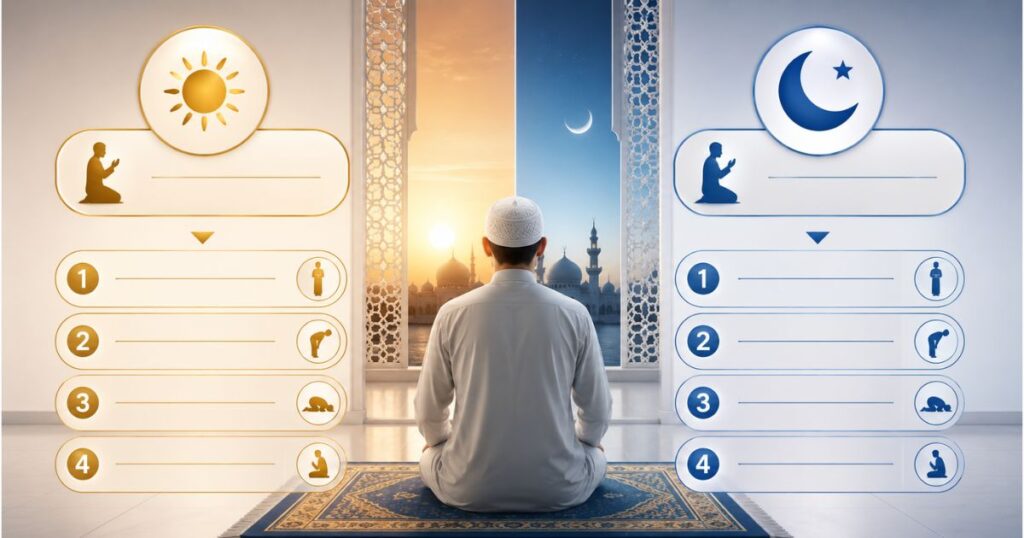
This is where many guides blur the lines. Here’s the clear distinction:
The core recitations are identical in both the Sunnah and Fard rakats Al-Fatiha, and additional Surah, Ruku, and Sujood duas don’t change. Only the Niyyah changes, since you’re mentally distinguishing which set of rakats you’re performing.
Most scholars recommend praying the 2 Sunnah rakats first, then the 2 Fard rakats, ideally as separate, distinct units rather than combined into one four-rakat prayer.
What to Say in Ruku and Sujood During Fajr
| Position | What You Say | How Many Times |
| Ruku | Subhana Rabbiyal Adheem | 3 times (minimum) |
| Rising from Ruku | Sami’ Allahu liman hamidah, Rabbana lakal hamd | Once |
| Sujood | Subhana Rabbiyal A’la | 3 times (minimum) |
These phrases don’t change based on which prayer you’re performing Fajr, Dhuhr, Asr, Maghrib, or Isha all use the same Ruku and Sujood words. What makes Fajr distinct is the audible Al-Fatiha and Surah recitation in both rakats, unlike Dhuhr and Asr where these are recited silently.
Closing the Prayer Tashahhud and Tasleem
After the second Sujood of your final rakat, you sit and recite the Tashahhud, followed by Salawat (blessings on the Prophet Muhammad, peace be upon him). You then complete the prayer with Tasleem turning your head to the right and saying “As-salamu alaikum wa rahmatullah,” then repeating to the left.
This closing sequence is the same across all five daily prayers, so once you’ve memorized it for Fajr, you’ve learned it for every prayer.
Common Mistakes Beginners Make with Fajr Words

- Reciting Al-Fatiha silently. Since Dhuhr and Asr are silent prayers, new learners sometimes carry that habit into Fajr by mistake. Fajr’s first two rakats should be audible.
- Mixing up Sunnah and Fard Niyyah. Because the wording of the rest of the prayer is identical, it’s easy to forget which Niyyah you set. Pause and reset your intention consciously before each pair of rakats.
- Rushing the Tasleem. Turning both directions with the full phrase, rather than a quick nod, is part of correctly completing the prayer.
- Skipping the additional Surah. Reciting only Al-Fatiha without a second Surah in the first two rakats is a common oversight for beginners still building their memorized Surah list.
A First-Time Reciter’s Experience
Many new Muslims and reverts describe the first few weeks of learning Fajr’s words as the hardest not because the words themselves are long, but because remembering the sequence under pressure (early morning, half-awake, unfamiliar Arabic) takes repetition.
A practical approach that helps: learn the words in layers. Master the Takbeer and Al-Fatiha first, since you’ll say these most often across all five prayers. Then add Ruku and Sujood duas, since they’re identical everywhere. Save Tashahhud for last, since it’s the longest single recitation but once learned, it closes every prayer you’ll ever pray.
This layered approach reduces what could feel like memorizing one long, unfamiliar block of text into four short, reusable pieces.
FAQs
What words do you say in Fajr prayer?
You recite the Niyyah (silently), Takbeer (“Allahu Akbar”), Surah Al-Fatiha, an additional Surah, Ruku and Sujood duas, Tashahhud, Salawat, and Tasleem following the same sequence for both the Sunnah and Fard rakats.
How many rakats is Fajr prayer?
Fajr consists of 2 Sunnah rakats and 2 Fard rakats, for a total of 4 rakats, though the Sunnah and Fard are prayed as two separate units.
Is Fajr recited loudly or silently?
The Al-Fatiha and additional Surah in Fajr’s first two rakats are recited aloud, along with Maghrib and Isha’s first two rakats. Ruku, Sujood, and Tashahhud recitations remain silent in every prayer.
What is the Niyyah for Fajr?
The Niyyah is a silent mental intention to pray either the Sunnah or Fard rakats of Fajr, facing the Qibla, for the sake of Allah. It doesn’t need to be spoken aloud.
What do you recite in Sujood during Fajr?
You say “Subhana Rabbiyal A’la” (Glory to my Lord, the Most High) a minimum of three times in each of the two Sujood positions per rakat.
Do the words change between Sunnah and Fard Fajr?
Not only the Niyyah differs. All other recitations (Al-Fatiha, Surah, Ruku, Sujood, Tashahhud) stay the same across both sets of rakats.