
Plucking eyebrows in Islam is a topic discussed by Islamic scholars based on Quranic teachings and Hadith. Many scholars consider altering the natural shape of eyebrows for beautification impermissible, while some allow removing excessive or abnormal hair. Understanding the Islamic perspective helps Muslims make informed decisions in accordance with their faith.
What Does “Plucking Eyebrows” Mean in Islam? (Al-Nams Explained)
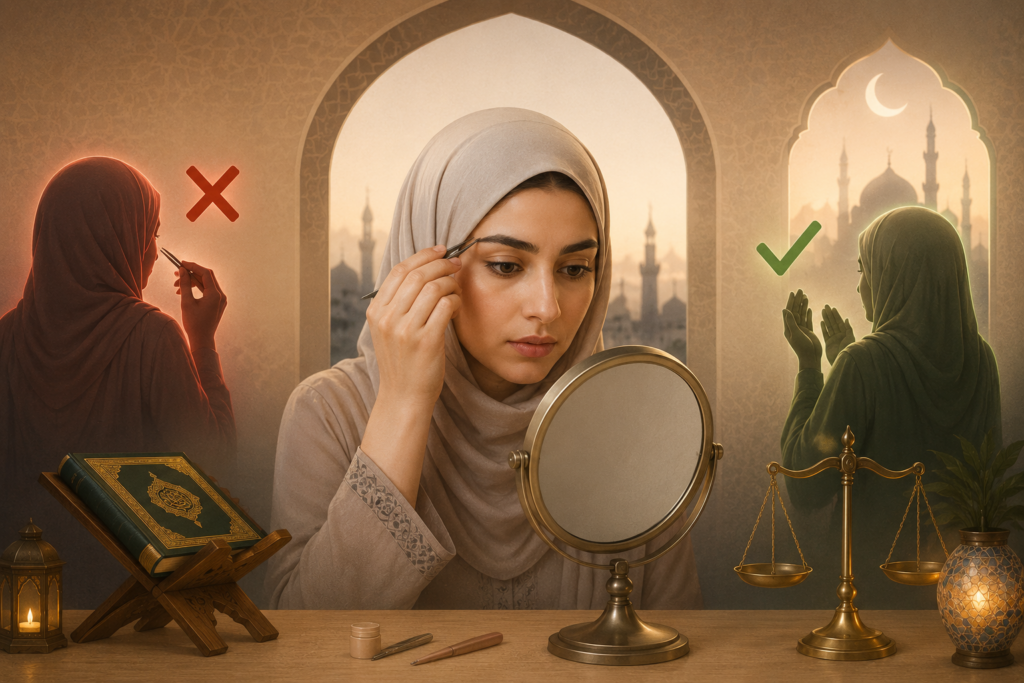
Before we dive into rulings, let’s get the words right. A lot of the confusion starts with translation.
In Islamic discussions, plucking the eyebrows is called al-nams. A woman who does it is called al-namisah, which simply means “the one who plucks.” A woman who asks someone else to do it for her is called al-mutanammisah.
Don’t worry about memorizing those terms. Just know that al-nams refers to removing eyebrow hair to change its shape.
The Meaning of Al-Nams and Al-Namisah
Here’s a simple breakdown of the different beauty methods people ask about:
- Plucking: Pulling out hairs one by one with tweezers.
- Threading: Using a twisted thread to remove rows of hair.
- Waxing: Using sticky wax to pull off many hairs at once.
- Trimming: Cutting long hairs shorter without removing the root.
- Shaping: Changing the eyebrow’s natural form to look a certain way.
Most scholars focus on the outcome: are you changing the natural shape of your eyebrows? If yes, that’s the part they consider a problem.
Why This Topic Causes So Much Confusion
Two things make this messy.
First, translation gaps. Old Arabic terms don’t map neatly onto modern beauty trends like microblading or brow lamination.
Second, modern beauty norms. Shaped eyebrows are everywhere now, so the question feels personal and urgent. That’s why online answers seem to clash so often.
The Main Evidence Hadith and Quran on Eyebrow Plucking
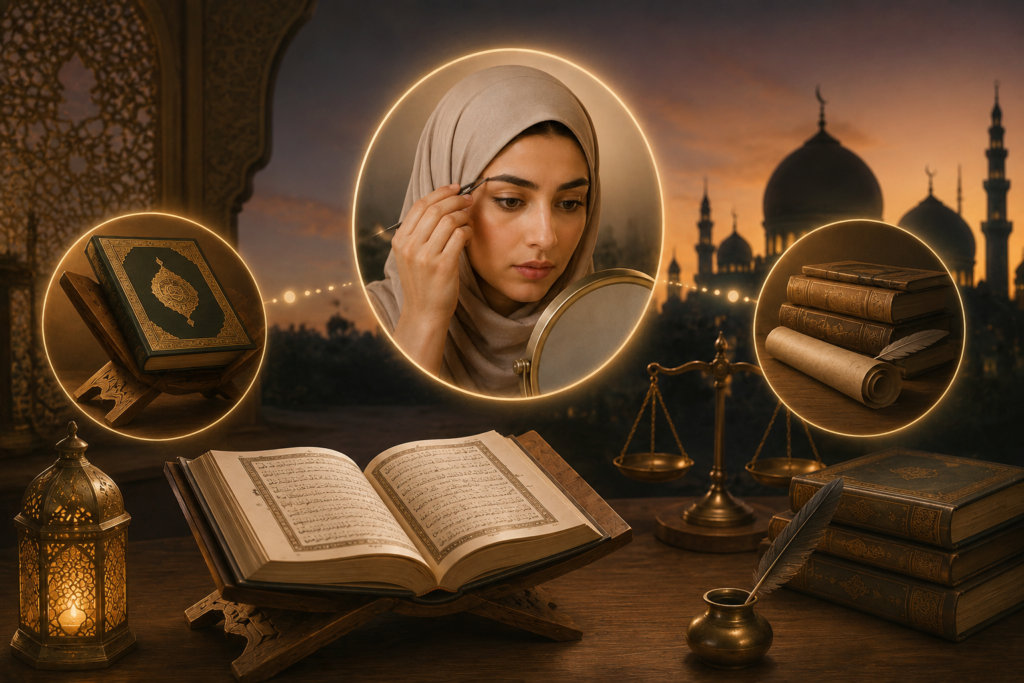
The ruling on plucking eyebrows in Islam doesn’t come from a single verse. It comes from a hadith, plus a broader Quranic principle. Let’s look at both.
The Hadith of Ibn Mas’ud (The Curse Narration)
This is the heart of the matter. The companion Abdullah ibn Mas’ud reported that the Prophet Muhammad said:
“Allah has cursed the women who do tattoos and those who have them done, those who pluck their eyebrows, and those who file their teeth for beauty, changing the creation of Allah.”
This narration appears in Sahih al-Bukhari (5931) and Sahih Muslim (2125) the two most trusted hadith collections in Islam. That’s why scholars take it so seriously.
The Quranic Verse on “Changing the Creation of Allah”
Scholars connect this hadith to a verse in Surah An-Nisa (4:119). In it, Satan boasts that he will lead people to change the creation of Allah.
The link is simple: if reshaping eyebrows counts as changing what God made for no good reason, then it falls under this warning. This is the deeper principle behind the ruling.
How Scholars Interpret This Evidence
Here’s where opinions split.
Some scholars read the hadith literally. The Prophet said it, so plucking is forbidden, full stop.
Others read it in context. They ask why this act was condemned, and whether the reason still applies today. That single question creates the two main views you’re about to see.
The Two Main Scholarly Views (Side-by-Side Comparison)
This is where most websites leave you confused. So let’s lay both views side by side, fair and square.
| View | Ruling | Main Evidence | Key Scholars | Conditions / Exceptions |
| Majority View | Plucking eyebrows is haram | The curse hadith (Bukhari & Muslim) + “changing the creation of Allah” (An-Nisa 4:119) | The Standing Committee, Ibn Uthaymin, Ibn Baz | Removing hair between the brows is still allowed |
| Minority / Contextual View | Permissible under conditions | Same hadith read in historical context; reports from Aisha | Dr. Yasir Qadhi, Ibn Ashur (reasoning), Egypt’s Dar al-Ifta | Allowed mainly to beautify for a husband; not for showing off to strangers |
View 1 Plucking Is Haram (Majority Position)
The majority keeps it straightforward. The Prophet cursed the act, and a curse signals a major sin. They argue the ruling stands regardless of changing fashions.
For them, reshaping your eyebrows for beauty is eyebrow plucking haram territory, plain and simple.
View 2 Permissible Under Certain Conditions (Minority/Contextual Position)
The minority digs into context. Some scholars, like Ibn Ashur, note that in early Arabia, certain beauty practices were tied to immodest behavior. The curse, they argue, targeted that association not the act in isolation.
They also point to a report from Aisha, the Prophet’s wife, who reportedly allowed removing facial hair that bothered a woman. And several classical scholars permitted grooming to please one’s husband.
So can women pluck eyebrows in Islam under this view? Yes but with clear limits, mainly within marriage and not to attract strangers.
What Is Actually Allowed vs. Not Allowed? (Clear Breakdown)
Let’s make this practical. Here’s a simple two-column snapshot most people find genuinely helpful.
| Widely Allowed | Not Allowed (Majority View) |
| Removing hair between the eyebrows | Reshaping natural eyebrows for beauty |
| Removing upper lip hair | Thinning thick brows to follow a trend |
| Removing leg and arm hair | Plucking to look attractive to strangers |
| Treating a medical or disfiguring issue | Drawing on new brows after removing real ones |
A few gray areas sit in the middle:
- Trimming a few overly long hairs for neatness.
- Tidying stray hairs without changing the shape.
The practical rule of thumb: if you’re neatening without changing the natural shape, most scholars are relaxed. If you’re reshaping for beauty, that’s where the majority draws the line.
Does the Ruling Differ for Men and Women?
Good question and one people ask a lot.
The famous hadith mentions women directly. That’s because, historically, eyebrow plucking was mainly a female beauty practice.
But most scholars say the ruling applies to men too. The principle not changing the creation of Allah for vanity doesn’t depend on gender.
Today, this also touches modern trends like eyebrow slits in young men. Many scholars discourage these, partly because of the vanity concern and partly because of the idea of avoiding pointless imitation of trends. The underlying logic stays the same for everyone.
Why Is Plucking Eyebrows Considered Haram? (The Reasoning)
So why is this even a big deal? Here are the four reasons scholars usually give.
- Changing the creation of Allah. Reshaping your face for no real need is seen as rejecting how God made you.
- Historical association. The practice was once linked to immodest behavior in early Arabia.
- Chasing beauty trends. Doing it to attract attention is treated as a deeper concern than simple grooming.
- Obeying a clear prohibition. When a trusted hadith condemns something, many Muslims follow it out of trust, even without full explanation.
Notice the theme: the worry isn’t hair itself. It’s changing the creation of Allah out of vanity.
What Should You Do If You Already Pluck Your Eyebrows?
Maybe you’ve been plucking for years and just learned about this. First, breathe. You’re not alone, and panic helps no one.
Here’s a calm, step-by-step way to think it through:
- Learn the ruling without guilt or fear. Knowledge is a gift, not a punishment.
- Make sincere repentance (tawbah). This simply means feeling regret and turning back to God with a clean heart.
- Decide your path. Choose to stop, or follow a qualified scholar’s view that fits your situation.
- Ask a trusted local scholar. They can weigh your specific case far better than a random forum post.
- Focus on intention and consistency. Small, steady steps matter more than chasing perfection overnight.
This is one of the most important parts of understanding plucking eyebrows in Islam the response should bring peace, not despair.
Expert Insight How Scholars and Everyday Muslims Navigate This
Let’s get real about how this actually shows up in daily life.
Picture a Muslim woman in the U.S. getting ready for a wedding. Her friends are getting their brows threaded, and she’s quietly wondering if she should too. That moment of hesitation is incredibly common.
Or think of a college student who learns about the ruling for the first time after years of shaping her brows. She feels torn between her faith and a habit she barely thought about. These are honest, relatable situations not edge cases.
Scholars like Dr. Yasir Qadhi have addressed exactly this tension. His contextual reasoning helps explain why the prohibition existed, which gives thoughtful readers more than a flat “no.”
Here’s the balanced truth: respected scholars genuinely disagree on the details. That’s why the smartest move is to ask a trusted scholar who knows your situation, rather than stitching together random answers online. A good teacher considers your intention, your circumstances, and the strength of each opinion something a search result simply can’t do.
Conclusion
Islam encourages believers to maintain their appearance while following religious guidelines. Since scholarly opinions may differ in specific cases, consulting a qualified Islamic scholar can provide clarity. The goal is to balance personal grooming with adherence to Islamic teachings.
FAQs
Is it haram to pluck the hair between your eyebrows?
Most scholars say removing the hair between the eyebrows is allowed. That hair isn’t considered part of the actual eyebrow, so taking it off doesn’t change the eyebrow’s natural shape. This is one of the few points both major views tend to agree on.
Is eyebrow threading haram in Islam?
The ruling on eyebrow threading in Islam follows the same logic as plucking. If threading reshapes or thins your natural brows for beauty, the majority view considers it forbidden. If you’re only removing the hair between the brows, that’s generally fine.
Can a woman pluck her eyebrows for her husband?
A minority of scholars allow it specifically for beautifying for a husband, citing reports from Aisha and several classical scholars. The majority, however, still consider it forbidden even in this case. So the answer truly depends on which scholarly view you follow.
Is trimming or neatening eyebrows the same as plucking?
Not quite. Trimming a few long hairs for tidiness, without changing the shape, is treated more leniently by many scholars. The concern grows when you start reshaping or thinning your brows for beauty, which is where the prohibition kicks in.
Does the Quran specifically forbid plucking eyebrows?
No, the Quran doesn’t mention eyebrows by name. The ruling comes from a hadith in Bukhari and Muslim, supported by a Quranic principle about changing the creation of Allah in Surah An-Nisa. So it’s a blend of hadith and broader Quranic guidance.
Is microblading or eyebrow tattooing haram?
Most scholars consider eyebrow tattooing and microblading haram, since the same curse hadith condemns tattooing directly. Microblading is widely treated as a form of tattooing because it places pigment under the skin. As always, check with a trusted scholar for newer cosmetic methods.