
How Many Rakahs Are in Each Prayer? Muslims perform 17 obligatory (Fard) rakahs across the five daily prayers: 2 for Fajr, 4 for Zuhr, 4 for Asr, 3 for Maghrib, and 4 for Isha. Add the recommended Sunnah, Nafl, and Witr rakahs, and the daily total most guides cite is around 40 rakahs.
What Is a Rakah?

A rakah is one complete unit of Salah. It’s built from a fixed sequence: standing (Qiyam) while reciting Quran, bowing (Ruku), then two prostrations (Sujood) with a brief sitting pause between them.
Every prayer is made up of a set number of these units see our full guide on the names of the prayers in Islam for how each one fits into the daily cycle. That’s what “how many rakahs” is really asking.
Rakahs for Each of the 5 Daily Prayers
Here’s the complete breakdown. Fard rakahs are obligatory, skipping them intentionally invalidates the prayer. Sunnah and Nafl rakahs are the Prophet Muhammad’s (peace be upon him) additional practice highly recommended, but not compulsory. Witr closes out the night and is treated as necessary (wajib) by many scholars.
| Prayer | Sunnah (before) | Fard | Sunnah/Nafl (after) | Witr | Card-only total | All-inclusive total |
| Fajr | 2 | 2 | 2 | 4 | ||
| Zuhr | 4 | 4 | 2 (+2 Nafl) | 4 | 12 | |
| Asr | 4 (Nafl) | 4 | 4 | 8 | ||
| Maghrib | 3 | 2 (+2 Nafl) | 3 | 7 | ||
| Isha | 2 | 4 | 2 (+2 Nafl) | 3 | 4 | 17 |
| Daily total | 17 | 17 | ~40 |
Note: Sunnah and Nafl counts here follow the widely taught Hanafi presentation; other schools count some of these rakahs slightly differently (more on that below), but every school agrees on the 17 Fard rakahs.
Fajr
2 Fard rakahs, preceded by 2 Sunnah Mu’akkadah. The Prophet ﷺ was reportedly more consistent about these two Sunnah rakahs than almost any other voluntary prayer. For a full walkthrough, see how to pray Fajr step by step or check the exact rakah count for Fajr prayer in detail.
Zuhr
4 Fard rakahs at the core, with 4 Sunnah before and 2 after some traditions add 2 more Nafl at the very end. Our step-by-step guide to praying Dhuhr walks through each unit in order.
Asr
4 Fard rakahs only. Four Sunnah rakahs before are recommended (Nafl) in many traditions, but they’re not stressed the way Fajr’s or Zuhr’s are see how many Sunnah rakahs are recommended for Asr and whether you can pray Sunnah before Asr for the full nuance. For the prayer itself, follow our guide on how to pray Asar.
Maghrib
3 Fard rakahs the only daily prayer with an odd Fard count. Muslims typically follow it with 2 Sunnah, and some also pray 2 additional Nafl. See the complete Maghrib rakah guide or how to pray Maghrib step by step for beginners.
Isha
4 Fard rakahs, then 2 Sunnah, optionally 2 more Nafl, and finally Witr usually prayed as 3 rakahs to close the night’s prayers. Our step-by-step guide to praying Isha covers the full sequence.
Fard vs. Sunnah vs. Nafl vs. Witr What’s the Difference?
| Type | Meaning | If you miss it |
| Fard | Obligatory; core of the prayer | Must be made up (Qada) as soon as possible |
| Sunnah Mu’akkadah | Strongly recommended, modeled on the Prophet’s ﷺ regular practice | Not sinful to miss occasionally, but discouraged habitually |
| Nafl | Voluntary, extra devotion | Entirely optional |
| Witr | Closes Isha; treated as necessary (wajib) by many scholars | Views differ by school on how seriously it’s treated if skipped |
How Many Rakahs Are in Jummah (Friday) Prayer?
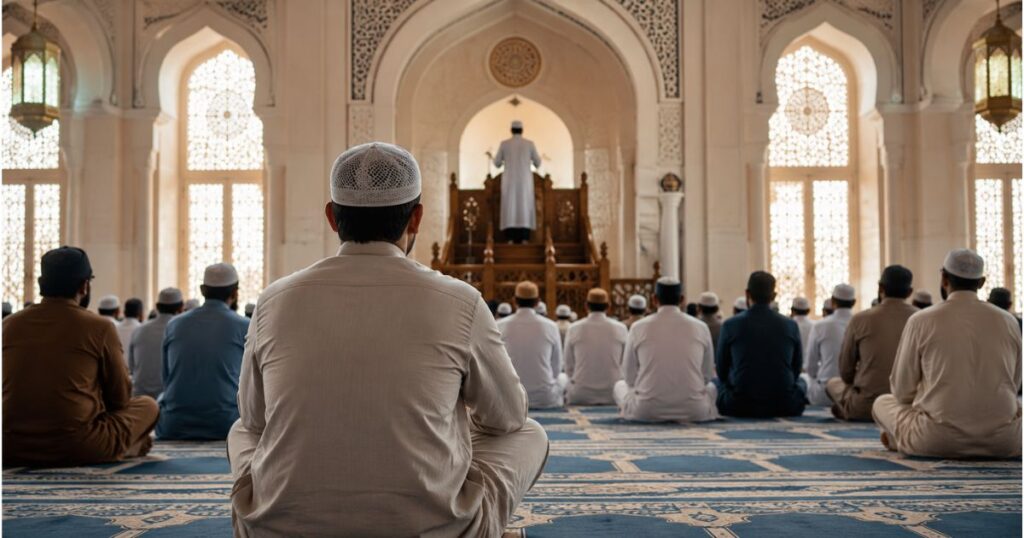
Jummah replaces Zuhr for adult men on Fridays and consists of 2 Fard rakahs, led in congregation with two short sermons (khutbahs) in between. Many people also pray a greeting-the-mosque prayer (2 rakahs) beforehand and Sunnah rakahs before or after, depending on local practice.
How Many Rakahs Are in Eid Prayer?
Both Eid al-Fitr and Eid al-Adha consist of 2 rakahs, prayed in congregation. Eid prayer has no Adhan or Iqamah beforehand, and it includes extra Takbirs (glorifications of Allah) not found in the daily prayers. See our step-by-step guide to praying Eid Salah for the full method.
Rakahs for Special Prayers Taraweeh, Tahajjud, Witr
Taraweeh is a Ramadan-only night prayer performed after Isha. The most commonly cited count is 20 rakahs, though a widely practiced alternative often linked to how it was prayed in some early Medina congregations is 8 rakahs, both followed by Witr. Neither number is “wrong”; they reflect different, long-established traditions.
Tahajjud is a voluntary night prayer with no fixed rakah count; you pray in sets of two, for as long as you wish, typically in the last third of the night. Learn more about the benefits of Tahajjud and how to pray Tahajjud step by step.
Witr, discussed above under Isha, is most often prayed as 3 rakahs, though 1 rakah is also a valid, less common practice in some traditions.
Do the Sunnah Rakahs Vary by School of Thought?
Yes and this is exactly why you’ll see slightly different “total rakah” numbers across different websites.
All four Sunni schools of jurisprudence Hanafi (widely followed in South Asia, Turkey, and Central Asia), Maliki (North and West Africa), Shafi’i (East Africa, Southeast Asia), and Hanbali (Saudi Arabia, Qatar) agree completely on the 17 Fard rakahs. Where they differ is in exactly how many Sunnah and Nafl rakahs are recommended around them, and in a few cases, whether an extra Nafl set is emphasized at all.
That’s the real answer to “why don’t these numbers match” it’s not that one source is wrong, it’s that Fard counts are fixed and universal, while Sunnah/Nafl counts are a matter of recommended practice that varies slightly by school.
A Simple Way to Start If You’re New to Prayer
If the full chart feels like a lot, don’t try to adopt all of it at once. Our complete guide on how to pray for beginners breaks this down further, but here’s a practical three-stage approach that works well for new Muslims and reverts:
- Start with Fard only to get the 17 obligatory rakahs solid first. This alone fulfills your prayer obligation.
- Add Fajr’s Sunnah and Witr; these two are the most emphasized voluntary prayers, so they’re a natural next step.
- Build up the rest gradually and add the remaining Sunnah and Nafl rakahs as they become comfortable, rather than all at once.
Trying to do everything on day one is the most common reason people burn out on the voluntary rakahs. First is a far more sustainable starting point.
Conclusion
Understanding how many rakahs are in each prayer helps Muslims perform Salah correctly and with greater confidence. The five daily prayers each have a specific number of obligatory (Fard) rakahs, along with Sunnah and Nafl prayers that offer additional spiritual rewards. By learning the complete rakah chart and praying consistently, Muslims can strengthen their connection with Allah and fulfill one of the most important pillars of Islam with sincerity and devotion. If you’re just beginning this journey, our step-by-step start guide is a good next stop.
FAQs
How many rakahs do Muslims pray in a day?
The obligatory total is 17 Fard rakahs across the five daily prayers. Including the recommended Sunnah, Nafl, and Witr rakahs, the commonly cited daily total is around 40.
Which prayer has the most rakahs?
Isha has the most when Sunnah, Nafl, and Witr are included up to 17 rakahs total, though only 4 of those are Fard.
Which prayer has an odd number of Fard rakahs?
With 3 Fard rakahs every other daily prayer has an even Fard count.
Do I have to pray the Sunnah rakahs?
. Sunnah rakahs are strongly recommended, not obligatory. Only the Fard rakahs are required for a valid prayer.
How many rakahs is Witr?
Witr is most commonly prayed as 3 rakahs, though some traditions allow 1 rakah. It’s prayed after Isha and is treated as necessary (wajib) by many scholars.
Is Taraweeh 8 or 20 rakahs?
Both numbers are practiced and considered valid. 20 rakahs is the more widespread tradition, while 8 rakahs (plus Witr) follows an alternative long-established practice.